Skin Science · 6 min read
Why Perimenopausal Skin Often Feels Sensitive Overnight
Why skin in perimenopause can feel suddenly reactive in the morning, what happens hormonally overnight, and what genuinely calms it through this phase.
Three things to know
Perimenopause Is Hormonal Volatility, Not Decline.
Why Skin Reacts So Fast to Estrogen Swings.
What Happens to Skin Overnight.
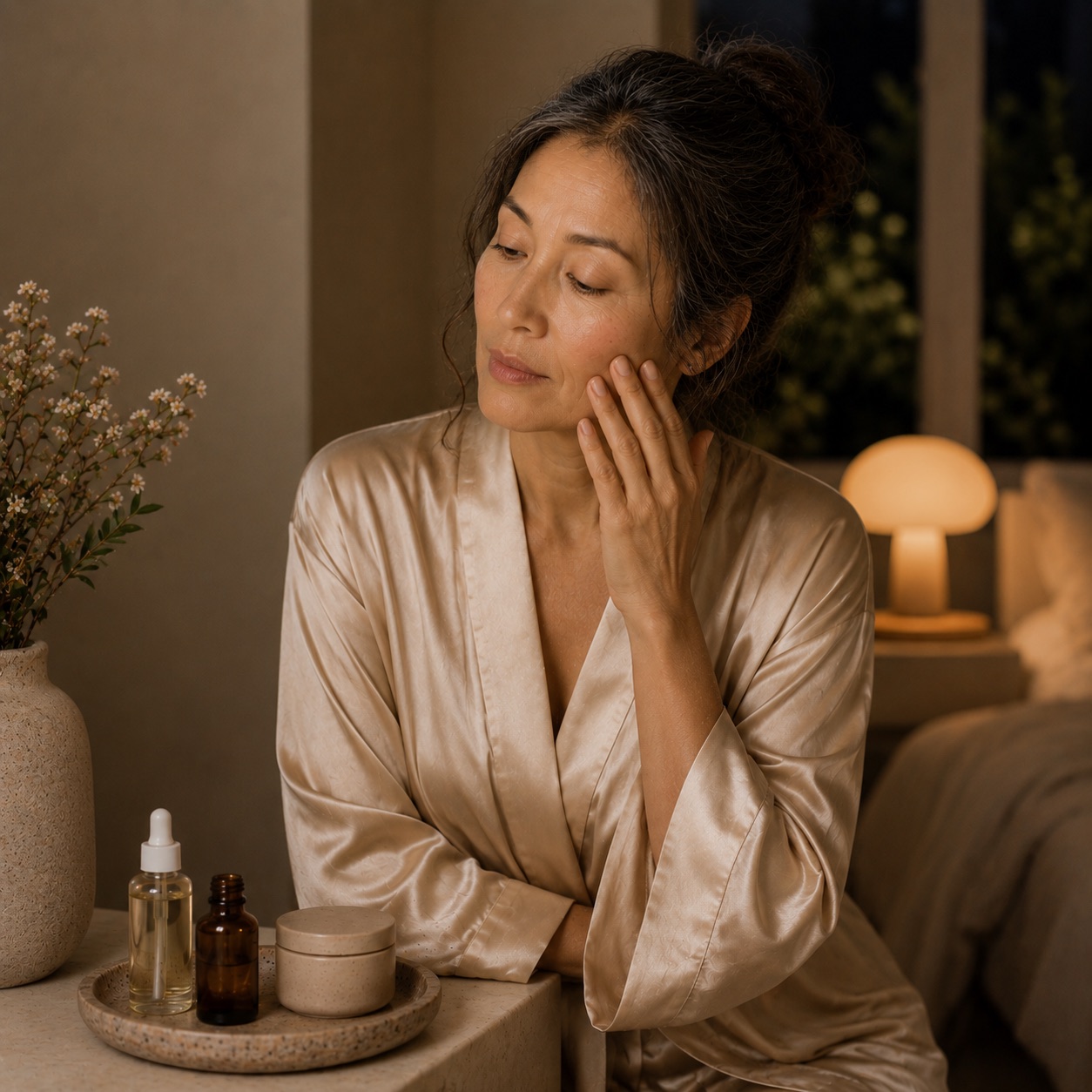
You go to bed with skin that feels fine. You wake up to skin that does not. The eye area is tight. One cheek is faintly red where it pressed against the pillow. Your shins itched in the night and now feel rough. Nothing has changed in your routine, your diet, or your products. The change seems to have happened in your sleep.
This is one of the more confusing patterns of perimenopausal skin, and one of the most common. It is not random. It is not in your head. It reflects something specific about how your body, and your skin, behave during this phase.
Here is what is actually happening, and what helps.
Perimenopause Is Hormonal Volatility, Not Decline
Most articles describe menopausal skin as a slow downward drift. For post-menopause, that is roughly accurate. Estrogen settles at a lower level and stays there.
Perimenopause is different. Estrogen does not decline smoothly. It swings. Levels can rise higher than they were in your reproductive years, then drop sharply within a single cycle, sometimes within a few days. Progesterone falls more steadily but unevenly. The hormonal environment is genuinely unstable.
This is why perimenopausal symptoms feel unpredictable. Hot flashes arrive without warning. Sleep falls apart for a week and returns. Mood shifts without cause. And skin, which is densely populated with estrogen receptors, reacts to these swings within hours rather than weeks.
If you have noticed that your skin behaves differently from one morning to the next, this is the reason.
Why Skin Reacts So Fast to Estrogen Swings
Skin cells across the dermis and epidermis carry estrogen receptors. Fibroblasts, immune cells, mast cells, blood vessels, and the cells that produce barrier lipids are all responsive to estrogen signaling.
When estrogen drops sharply, several things shift at once:
- Barrier integrity weakens
- Inflammation thresholds lower
- Blood vessels become more reactive
- Sebum production dips
- Mast cells become easier to trigger
None of these changes is dramatic on its own. Together, they create a skin that reacts more to ordinary contact than it did the day before. A familiar product can sting. A warm room can flush. A wool sweater can itch.
The skin did not become difficult. It is responding to a different internal environment than it was 24 hours ago.
What Happens to Skin Overnight
The night is when skin does most of its repair work. Cell turnover accelerates. The barrier rebuilds. Inflammation from the day resolves.
For this to work well, a few things need to be in place. Cortisol needs to drop to its overnight low. Body temperature needs to fall slightly. Sleep needs to be uninterrupted enough for the repair cycles to complete.
In perimenopause, several of these conditions are commonly disrupted:
- Hot flashes and night sweats raise skin temperature and wake you up
- Cortisol stays elevated when sleep is broken
- Estrogen swings interfere with the orderly repair processes
- Mast cells become more active at night and release more histamine when estrogen drops
By morning, the skin has often had a worse night than you realize. The reactivity you wake with reflects that.
The Cortisol Factor
Cortisol matters more in this picture than most articles acknowledge.
Normally cortisol drops through the evening, hits its lowest point around midnight, and climbs again before dawn. In perimenopause, fragmented sleep and night sweats push cortisol higher than it should be overnight. The morning peak can arrive earlier and sharper. Baseline cortisol tends to run higher than it did a decade earlier.
Elevated cortisol thins skin, raises inflammation, weakens the barrier, and accelerates collagen breakdown. Skin that wakes into a higher-cortisol environment is biochemically primed to react more to whatever it encounters first, which is usually your morning routine.
This is why a cleanser that felt fine yesterday can sting today.
Mast Cells and Nighttime Itch
Mast cells are immune cells in the skin that release histamine when triggered. They are particularly active overnight, and they carry estrogen receptors that make them more reactive when estrogen drops.
This explains a pattern many women in perimenopause notice: itching that arrives in the evening or overnight rather than during the day, sometimes with no visible rash. The skin can feel flushed or histamine-reactive on waking, even when nothing in your diet should have caused it.
It is not allergy. It is mast cells responding to hormonal change.
The Friction Factor
Some of the morning sensitivity is mechanical rather than hormonal.
Side sleeping presses one cheek and one forearm into the pillow and mattress for hours. Synthetic pillowcases trap heat. Warm bedrooms keep skin temperature elevated. Sheets washed in heavily fragranced detergent contribute their own irritation.
None of these matter much on resilient skin. On perimenopausal skin in a reactive phase, they compound.
Practical fixes that help:
- Cotton or silk pillowcases instead of synthetic
- A cooler bedroom (most sleep researchers recommend 16 to 19°C)
- Fragrance-free detergent
- Alternating sleep position when possible
What to Do When Skin Wakes Reactive
The instinct is to treat reactive skin with more products. The opposite usually works better.
Skip the actives. Retinoids, exfoliating acids, and vitamin C can wait. On a reactive morning, they will make things worse.
Use cooler water. Hot water on inflamed skin amplifies the inflammation. Lukewarm is enough.
Minimal routine. Gentle cleanser, lipid-rich oil, sunscreen. That is it.
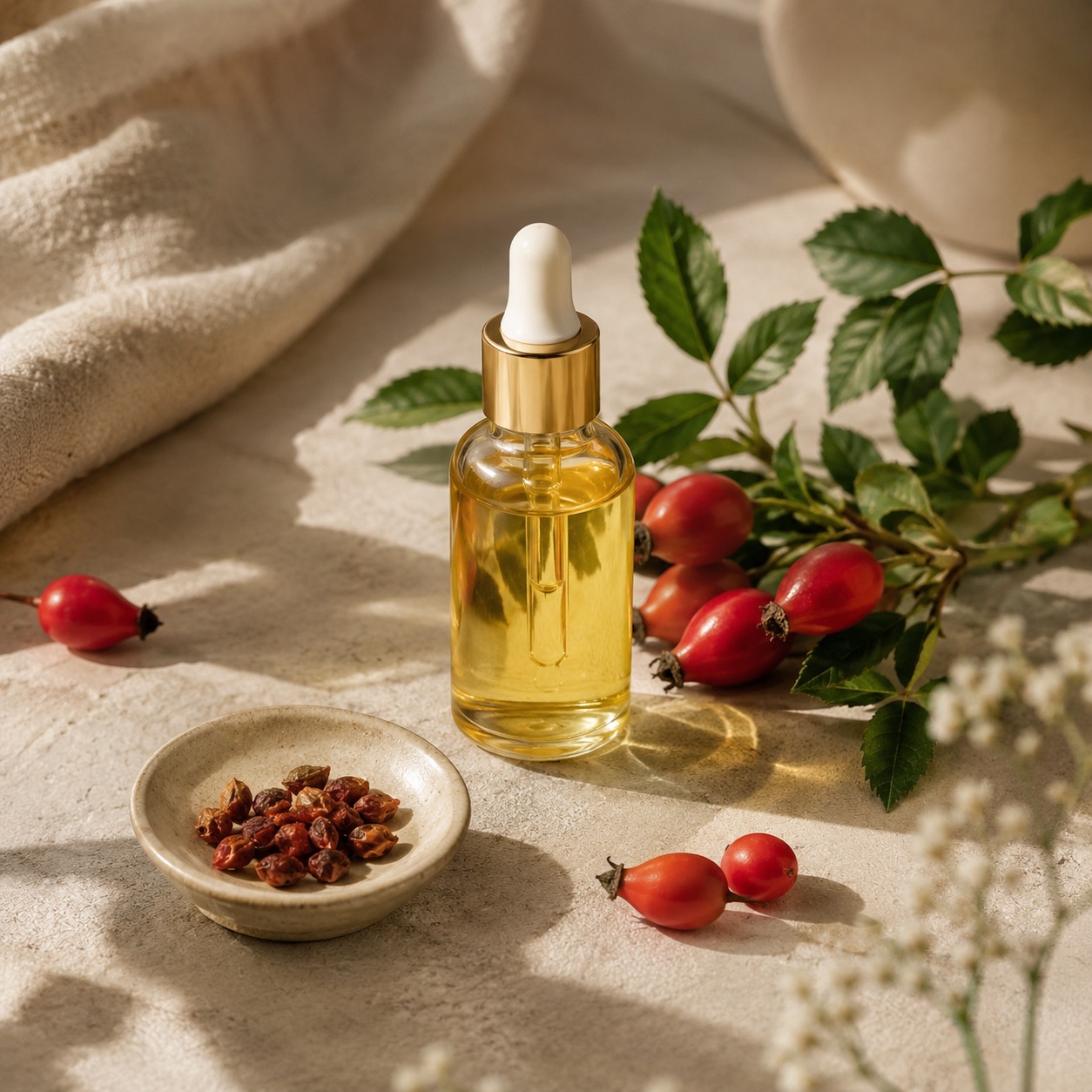
Lipid replenishment. A body and facial oil with linoleic acid and vitamin E supports the barrier without irritating it. Sunflower, sweet almond, jojoba, argan, rosehip, raspberry seed, and pumpkin seed oils are well tolerated.
Wait. Most overnight reactivity resolves within a day or two if you stop trying to fix it.
What to Do Before Bed
Some of the work is preventive.
Apply a barrier-supporting body oil before bed. This gives the skin the lipids it needs while it does its overnight repair, and it reduces transepidermal water loss through the night. A simpler evening face routine, particularly during reactive weeks, lets the skin recover without ingredient interference.
A cooler bedroom and breathable bedding reduce hot flash frequency and overnight skin temperature, which calms mast cell activity. These small changes affect how the skin wakes more than any product applied in the morning.
Why Consistency Matters in Perimenopause Specifically
The volatility of perimenopause makes a strong case for boring, consistent routines.
If your skin is calmer some weeks than others, you do not need a routine that responds to each fluctuation. You need a routine that provides steady support through the unpredictable phases. The fewer variables in your skincare, the easier it is to identify what is actually causing a reaction when one happens, and the less work your skin has to do to adjust.
This is why women in perimenopause often do better with a small set of well-chosen products than with an elaborate routine. The simplicity becomes its own stabilizer.
The Baya Approach
Baya was built for this phase specifically. Steady barrier support that holds whether you are in a calm week or a reactive one. A blend of lipid-rich plant oils that the skin can use on its best mornings and its worst.
The aim is not to suppress the skin's responses. It is to give the skin enough consistent support that the responses become smaller and less disorienting.
The Bottom Line
Skin that feels different in the morning during perimenopause is not random. It reflects hormonal volatility, disrupted sleep, elevated cortisol, and increased overnight mast cell activity, all of which can shift the skin's reactivity within 24 hours.
What helps is consistent gentleness rather than aggressive intervention. Lipid-rich barrier support before bed. A simple, restrained routine on reactive mornings. Cooler bedrooms, gentler bedding, and a recognition that the same skin will often be calmer within a few days.
The volatility is real. So is the recovery. Both are part of this phase, and both are easier when the skin is given steady support through the unpredictable weeks.
Frequently asked questions
Overnight sensitivity in perimenopause usually comes from hormonal fluctuations during the night, elevated cortisol from disrupted sleep, increased mast cell activity, and the cumulative effect on the skin barrier. The skin essentially wakes into a different biochemical environment than it went to sleep in.
Very likely. Perimenopause is hormonally volatile rather than steady, and the skin is unusually responsive to these fluctuations because of how many estrogen receptors sit on skin cells. Morning sensitivity is one of the more common, less-discussed signs of this phase.
Yes. Sharp drops in estrogen can quickly weaken the barrier, increase mast cell activity, and lower the skin's reactivity threshold within 24 hours. Reactions that feel sudden often are.
Cortisol patterns shift, body temperature changes, mast cells become more active, disrupted sleep increases inflammation, and hormonal fluctuations affect barrier function. By morning, the skin reflects all of these at once.
A simpler routine on reactive days, cooler water, lipid-rich barrier support through plant oils, gentler cleansers, and consistent bedtime skincare. Avoiding strong actives during sensitive phases is usually a relief.
The most volatile phase usually resolves once perimenopause ends and post-menopausal hormone levels stabilize. The overnight reactivity that is characteristic of perimenopause typically becomes much less common in the years after menopause itself.
More from The Baya Journal