Skin Science · 8 min read
The Cause Behind Crepey Skin During Menopause
The three biological changes that produce crepey skin in menopause, what can and cannot be reversed, and the realistic routine that delivers visible improvement.
Three things to know
What Crepey Skin Actually Is.
The Primary Cause: Collagen and Elastin Loss.
The Secondary Cause: Barrier and Hydration Loss.
Crepey skin tends to appear quietly. A change in how the inner upper arms look in certain lighting. A texture across the chest in the V-neck of a familiar blouse. The backs of the hands looking thinner. The texture is not quite wrinkles. It is finer, more diffuse, almost like very thin tissue paper.
For many women, it is the most disconcerting change of menopause because it does not match the simpler narrative of aging gracefully. It looks specific. It feels visible. And once it appears, no amount of moisturiser quite resolves it.
The cause is not vague. It is a specific combination of biological changes that produce a recognizable visual signature. Understanding what crepey skin actually is, and what causes it, makes a real difference in deciding what to do about it.
What Crepey Skin Actually Is
Crepiness is not a single condition. It is a visible texture pattern produced by several structural changes happening at once in the skin.
The skin has three working layers:
- The epidermis on top, which provides barrier function
- The dermis beneath it, which contains collagen and elastin fibres that give skin its firmness and elasticity
- The subcutaneous tissue below, which provides cushioning and volume
In healthy young skin, all three layers are thick, well-supported, and full of the proteins, lipids, and structural components that keep the surface smooth and the texture even.
In crepey skin, several of these layers have thinned. The epidermis is less hydrated. The dermis has lost collagen and elastin. The subcutaneous fat has decreased in some areas. The combination creates skin that no longer has the structural support to stay smooth, and which shows fine wrinkling and a thinner, more fragile appearance.
Crepiness is most visible where skin is thinnest to begin with and where structural changes show fastest: the inner upper arms, the chest and décolletage, the backs of the hands, the eyelids, and the inner thighs.
The Primary Cause: Collagen and Elastin Loss
The single biggest driver of crepey skin in menopause is the loss of collagen and elastin in the dermis.
Collagen provides the skin's firmness and structural support. Elastin provides its ability to stretch and recover. Both are produced by cells called fibroblasts, which respond to estrogen signaling. As estrogen declines in perimenopause and menopause, fibroblast activity slows. New collagen and elastin are produced more slowly. Existing fibres degrade more quickly because the enzymes that break them down are less well regulated.
The numbers are specific:
- Up to 30% of dermal collagen is lost in the first five years after menopause
- Skin thickness decreases by approximately 1-2% per year postmenopause
- Elastin fibres fragment and lose their recoil capacity over the same period
This is the structural underpinning of crepiness. The scaffolding that kept the skin smooth has thinned, and the surface is no longer being held up the way it used to be.
The Secondary Cause: Barrier and Hydration Loss
Collagen loss alone would produce thinner skin, but it would not produce the specific papery quality that characterizes crepiness. The papery look is the result of a second change layered on top of the structural one.
When the skin's barrier loses lipids and the dermis loses hyaluronic acid, the skin holds less water. Less water in the skin means the surface loses the plumpness that smooths fine texture. Light reflects off the surface unevenly. The skin appears finer, less luminous, and shows wrinkles that would otherwise be invisible.
This is why crepiness often looks worse on dry skin and better when the skin is well hydrated. The structural collagen loss is permanent, but the visible texture is significantly affected by how much water the skin is currently holding.
The implication matters: barrier replenishment can visibly improve crepiness even though it cannot rebuild collagen. The two work on different parts of the problem.
The Tertiary Cause: Sun Damage
Cumulative sun exposure is the third major driver, and on body areas like the chest, hands, and forearms, it is often more important than age itself.
UV radiation:
- Degrades collagen and elastin faster than aging alone
- Produces abnormal elastin (called solar elastosis) that does not function properly
- Causes oxidative damage that compromises skin structure
- Triggers chronic low-grade inflammation that erodes skin quality over time
The chest, hands, and forearms receive far more incidental sun exposure than the abdomen or upper back. This is why crepiness shows up on these areas first and most severely, even though they are not the thinnest skin on the body.
For women now in their 50s, the relevant sun exposure was largely accumulated decades ago, when sunscreen on the body was rarely used. The damage is already done. What sunscreen can do now is prevent further acceleration.
How the Three Causes Interact
Crepey skin in menopause is the product of these three causes working together:
- Collagen and elastin loss removes the structural scaffolding
- Hydration and barrier loss makes the thinning visible by reducing plumpness
- Sun damage accelerates both processes on exposed areas
This is why crepiness tends to appear specifically on chest, arms, and hands rather than uniformly across the body. These areas combine all three: they are naturally thinner, they lose hydration faster, and they receive more cumulative UV exposure.
It is also why a single approach rarely addresses crepiness fully. Each cause needs its own response.
What Can and Cannot Be Done
It is worth being clear about what is and is not achievable.
Cannot be fully reversed:
- Collagen that has been lost
- Elastin fibres that have degraded
- Sun damage already accumulated
- Structural thinning of the skin
Can be improved meaningfully:
- The visible texture of crepey skin through barrier replenishment
- The hydration and plumpness of the surface
- The pace of further collagen loss
- The skin's overall resilience and comfort
- Future progression with sun protection and supportive care
The honest position is that menopausal crepiness becomes more manageable, not undone. The skin can look noticeably better. It rarely returns to the texture of 35-year-old skin.
This is not a defeat. It is the realistic frame within which significant visible improvement is possible.
What Actually Helps
The interventions with the strongest evidence for crepiness:
Daily Sun Protection
The single highest-leverage intervention. SPF on the chest, hands, arms, and other exposed areas every morning, regardless of weather. This does not undo existing damage but it prevents the acceleration that would otherwise occur over the next decades. Of all habits, this is the one most worth committing to.
Topical Retinoids
Retinoic acid (prescription) and retinol (over-the-counter) stimulate fibroblast activity and can support modest collagen synthesis with consistent long-term use. The effect on crepiness is gradual and partial, but real. On menopausal skin, lower concentrations applied less frequently tend to work better than aggressive use, because the barrier needs to remain intact.
Vitamin C
Ascorbic acid is an essential cofactor for collagen synthesis. The body cannot make collagen without it. Topical vitamin C in stable forms (L-ascorbic acid, magnesium ascorbyl phosphate, tetrahexyldecyl ascorbate) supports collagen production and provides antioxidant protection against further damage.
Lipid-Rich Body Oils
A well-formulated body oil addresses the hydration and barrier component of crepiness directly. By replenishing the lipids the menopausal barrier has lost, oils help the skin hold more water, which immediately and visibly softens crepey texture.
This is the most overlooked piece. Many women focus on retinoids and vitamin C and skip the foundational barrier work, which is doing as much for visible texture as either of those.
Hormone Replacement Therapy
Of all interventions, HRT has the strongest evidence for preserving and partially restoring dermal collagen in postmenopausal women. The decision to use HRT is medical and depends on broader health factors, but its specific effect on skin collagen is well documented.
Professional Treatments
For more significant crepiness, treatments like microneedling, radiofrequency, fractional lasers, and certain ultrasound therapies can stimulate collagen production. These require professional consultation and are outside the scope of daily skincare, but they can be effective complements for women who want to address more advanced changes.
A Realistic Routine for Crepey Skin
For most women in perimenopause and menopause, the most effective daily approach is:
Morning: Gentle cleanse, vitamin C serum on face, neck, and chest, sunscreen on all sun-exposed areas including hands.
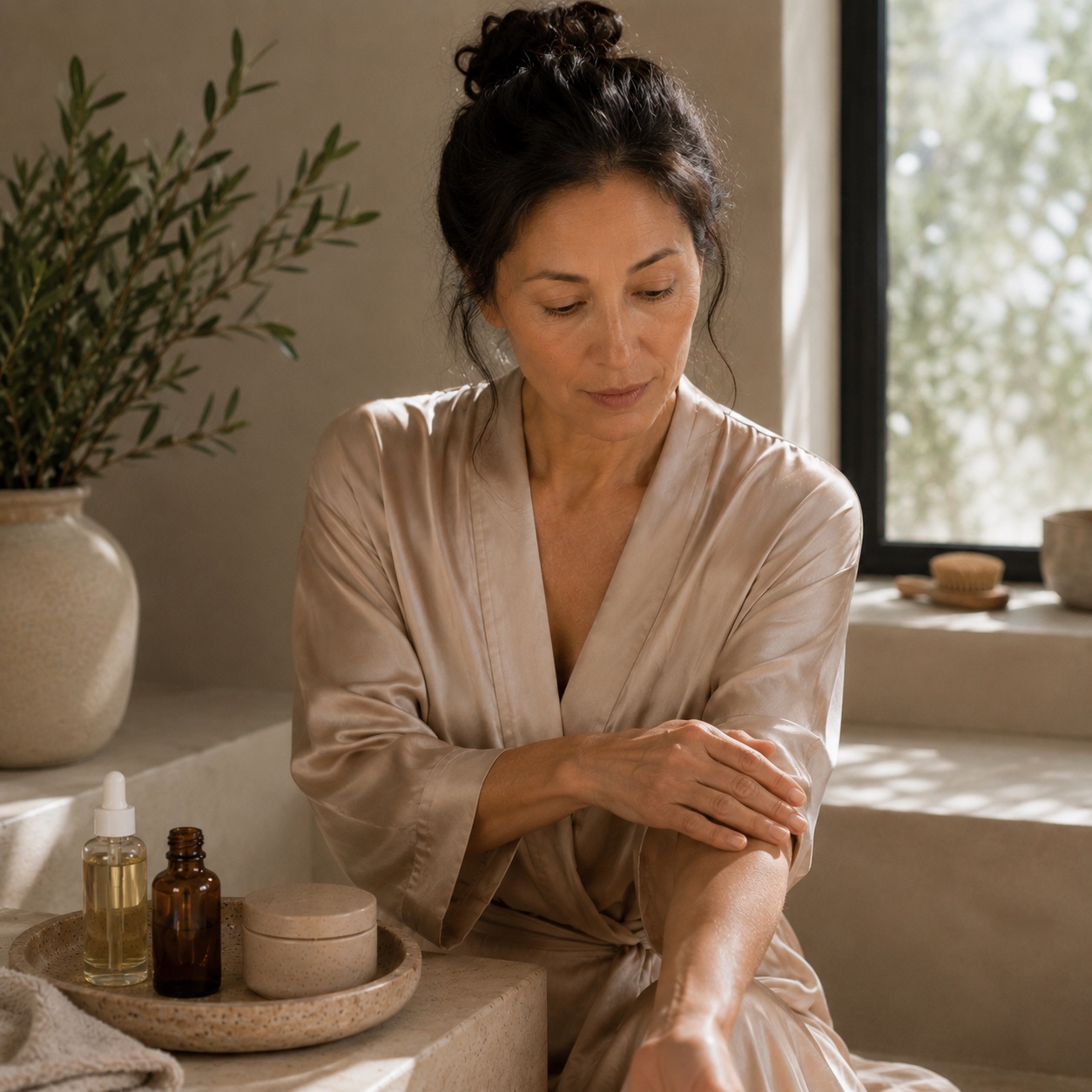
Body, after shower: Lipid-rich body oil applied to damp skin, with particular attention to the inner arms, chest, and hands.
Evening: Gentle cleanse, retinoid on facial skin (and neck and chest if tolerated), lipid-rich oil over the top.
Bedtime: Light additional application of body oil to particularly crepey areas like the inner upper arms and hands.
This is not elaborate. It is consistent. The combination addresses the underlying causes (sun protection prevents further damage, retinoids and vitamin C support what remaining collagen production is possible, lipid replenishment improves the immediate visible texture).
Improvements appear gradually. Most women notice softer texture within four to eight weeks of consistent care. More substantial changes appear between three and six months. The progression of crepiness slows considerably with this kind of routine.
The Baya Approach
Baya was built around the part of this problem that responds fastest: the barrier and hydration component. A lipid-rich body oil applied consistently does not rebuild collagen, but it improves the immediate visible texture of crepey skin by helping the skin hold more water, supporting the barrier, and reducing the chronic low-grade inflammation that accelerates structural loss.
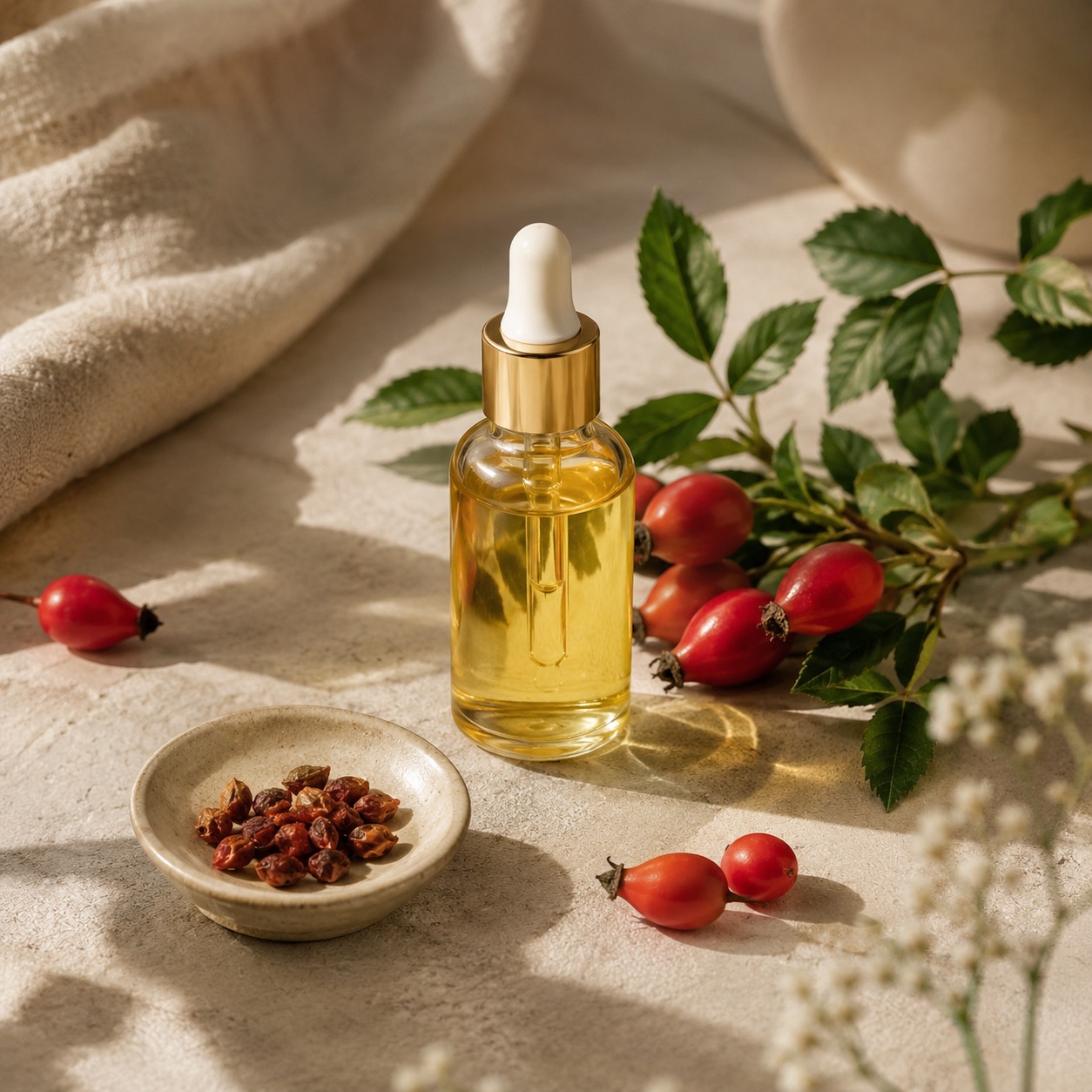
The blend (sunflower, sweet almond, jojoba, argan, rosehip, raspberry, and pumpkin seed oils) is formulated for the body areas where crepiness shows first: the chest, inner arms, and hands.
Combined with daily sun protection and, if appropriate, the slower-acting interventions like retinoids or vitamin C, it addresses the most modifiable component of crepiness with the highest immediate impact.
The Bottom Line
Crepey skin in menopause is caused by three things working together: collagen and elastin loss from estrogen decline, barrier and hydration loss that makes the structural thinning visible, and cumulative sun damage that accelerates both processes.
The collagen loss is largely permanent, but the visible texture is significantly affected by hydration and barrier health, both of which respond well to consistent care. Daily sunscreen prevents further acceleration. Lipid-rich body oils improve immediate appearance. Retinoids and vitamin C support what collagen preservation is possible.
For most women, the realistic outcome is meaningfully smoother, more comfortable skin with substantially slower progression of changes. The crepiness rarely disappears entirely once established, but it can look and feel significantly better with the right approach.
The cause is specific. The fix is multi-layered but achievable.
Frequently asked questions
A combination of three things: collagen and elastin loss driven by estrogen decline, barrier and hydration loss that reduces skin plumpness, and cumulative sun damage. The three work together to produce the specific thin, papery texture that characterizes crepiness.
Not fully, but it can be significantly improved. The collagen that has been lost cannot be entirely restored, but the visible texture responds well to lipid-rich body oils, sun protection, retinoids, vitamin C, and consistent care. Most women see meaningful improvement with a multi-layered approach.
Most commonly on the inner upper arms, the chest and décolletage, the backs of the hands, and the eyelids. These areas combine naturally thinner skin, faster hydration loss, and more cumulative sun exposure than other body areas.
Yes. A lipid-rich body oil cannot rebuild collagen, but it improves the visible texture of crepey skin by helping the skin hold more water, supporting the barrier, and reducing the inflammation that accelerates further structural loss. The improvement in appearance is usually noticeable within four to eight weeks.
A multi-layered approach: daily sun protection on all exposed areas, lipid-rich body oils applied to damp skin after showering, retinoids on tolerated areas, vitamin C for collagen support, and where appropriate, professional treatments like microneedling for more advanced changes. HRT, if medically suitable, has the strongest evidence for collagen preservation.
The visible improvement in texture from barrier and hydration support often appears within four to eight weeks. More substantial changes from retinoids and vitamin C take three to six months. Sun protection prevents further progression but does not show immediate improvement.
More from The Baya Journal