
Skin Science · 8 min read
The Link Between Hormones and Skin Sensitivity
Why skin often becomes sensitive in midlife, how estrogen and other hormones regulate skin comfort, and what genuinely calms reactive menopausal skin.
Three things to know
Why Skin Becomes More Sensitive After 45.
How Estrogen Quietly Regulates Skin Comfort.
What Happens When Estrogen Declines.
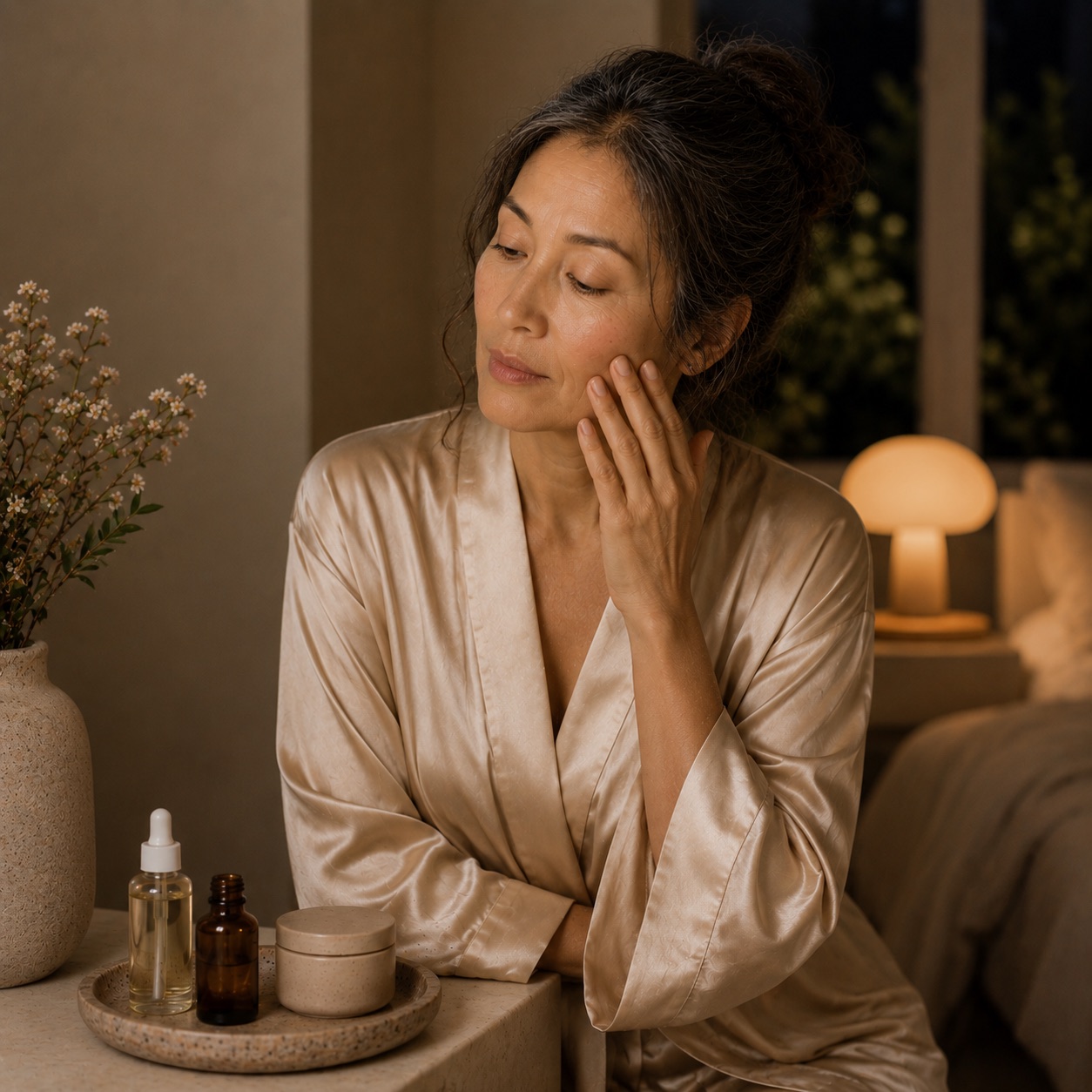
There is a particular kind of confusion that arrives in the late forties. The face cream you have used reliably for years suddenly stings around the eyes. A wool sweater you have worn for a decade now itches against your forearms. The hot shower that once felt restorative leaves your skin tight and faintly burning. A perfume you have always loved seems too sharp. None of it makes sense, because nothing has changed except, somehow, the skin itself.
You are not imagining it. Nothing is wrong with you. Your skin has not become difficult or fussy.
What has changed is hormonal. And once you understand how deeply hormones shape the sensitivity of your skin, the rest of the picture begins to come into focus.
Why Skin Becomes More Sensitive After 45
Sensitivity is sometimes spoken about as if it were a fixed skin type. Some people have sensitive skin. Some do not. This framing can feel disorienting for women who have spent decades with calm, unreactive skin and find themselves, suddenly, in a different category.
The truth is that sensitivity is not always a permanent identity. It can be a state the skin enters in response to specific conditions. And one of the most common, least discussed triggers for new-onset sensitivity in midlife is the hormonal shift of perimenopause and menopause.
This is not allergy. It is not an autoimmune flare. It is the skin reporting that the systems which used to keep it calm are no longer working at full capacity.
How Estrogen Quietly Regulates Skin Comfort
Estrogen rarely appears in conversations about skin sensitivity, which is unfortunate, because it does an extraordinary amount of work to keep skin comfortable.
Among the things estrogen supports:
- Barrier integrity. It influences the production of ceramides and the fatty acids that hold the skin barrier together, which is the skin's first defense against irritants.
- Immune regulation. It helps moderate the inflammatory responses of skin cells, keeping reactions proportional rather than excessive.
- Wound healing. It supports the quiet, daily repair the skin does after small insults like friction, sun exposure, or harsh products.
- Nerve modulation. It plays a role in how skin nerve endings perceive and report sensation, including the threshold at which something is felt as uncomfortable.
- Hydration. It supports the synthesis of hyaluronic acid and sebum, both of which contribute to a calm, plump skin environment.
When estrogen is abundant, all of these systems run smoothly in the background. The skin tolerates a wide range of inputs without reacting. It is forgiving.
When estrogen declines, this regulatory work slows. Not in one system, but in all of them at once. The result is skin that is more easily provoked by things that used to be fine.
What Happens When Estrogen Declines
The shift toward sensitivity is rarely a single event. It is a cascade.
The barrier thins, which means more potential irritants reach the deeper layers of skin where the immune cells live. The inflammation regulation softens, which means the response to those irritants is more pronounced. The repair function slows, which means the inflammation lingers longer than it would have at 30. The nerve sensitivity heightens slightly, which means more sensation reaches awareness as discomfort.
Each of these on its own would be manageable. Stacked together, they produce the experience that so many women in midlife describe in the same words: my skin has become so much more reactive than it used to be.
This is the biology behind that sentence.
The Other Hormones in the Conversation
Estrogen is the largest player, but it is not the only one.
Progesterone, which also declines in perimenopause and menopause, has its own calming effects on the skin and a role in regulating inflammation. Its decline contributes to the broader hormonal context that supports reactivity.
Cortisol, the body's primary stress hormone, often runs higher during the menopausal transition. Sleep is more interrupted. Anxiety is more common. Hot flashes and night sweats add their own physiological stress. Elevated cortisol thins the skin further, slows repair, and makes the immune system more prone to inflammatory reactions. This is one of the quiet reasons stress and skin sensitivity become so closely intertwined in midlife.
Androgens, including testosterone, shift in proportion as estrogen falls. The skin's oil production can change. The microbiome of the skin can shift. Some women experience a phase of unexpected congestion or new spots even as their skin is otherwise drier and more reactive.
These hormones do not act in isolation. They work together, and they shift together. The skin responds to the whole hormonal environment.
Why Things That Used to Be Fine Now Cause Reactions
The most disorienting part of new sensitivity is that the triggers are not new.
The same face cream. The same body wash. The same laundry detergent. The same wool sweater. Nothing in the bottle or the fabric has changed. What has changed is the threshold at which the skin will register an ingredient or texture as irritating.
A few of the most common triggers that begin to cause problems in menopausal skin:
- Fragrance, both synthetic and natural, often becomes more provocative
- Sulfate-based cleansers (in body washes and shampoos) strip the barrier more aggressively than they used to
- Alcohol-based toners and skincare can sting where they once felt refreshing
- Strong actives like retinoids, glycolic acid, and salicylic acid often need lower concentrations or less frequent use
- Hot water dissolves more lipids from a thinner barrier
- Wool and rough fabrics rub against more reactive nerves
- Essential oils at higher concentrations can become irritating
None of this means these things are inherently bad. It means the skin's tolerance has shifted, and what was once safely below the reaction threshold is now sometimes above it.
The Sensory Experience of Hormonal Sensitivity
The sensations women describe are remarkably consistent.
A tight feeling within minutes of stepping out of the shower. A faint tingling or stinging when applying products that were once unremarkable. Itchy legs at night, especially in winter, particularly on the shins. A scratchy quality from fabrics that used to feel soft against the inner arms and chest. Mild redness in the décolletage that flares with hot drinks, exercise, or warm rooms. A sudden intolerance for fragranced laundry products. Towels feeling rougher than they used to.
These are not exaggerations. They are the felt reality of a barrier that is doing more work with fewer resources, in a body whose hormonal environment has fundamentally changed.
Naming the experience can be its own quiet relief. The reactions are not in your head. They are not a sign that you have suddenly developed allergies. They are a sign that your skin is operating under different conditions and is asking for different inputs.
Why Body Skin Reacts More Too
The conversation about sensitivity tends to focus on the face, but body skin often becomes reactive in parallel and sometimes earlier.
The shins, forearms, chest, and back have fewer oil glands than facial skin and thinner barriers in places. Once the lipid film that protected them thins further with estrogen decline, the same triggers that affect the face begin to register on the body too. Tight feelings after bathing. Itchiness at night. New irritation from familiar clothing.
This is also why body care during menopause often benefits from the same gentling approach that the face does. Simpler products. Fewer ingredients. Lipid-rich rather than heavily fragranced.
What Actually Helps
The shift toward calmer skin in midlife is not complicated, though it does require some patience.
Simplify the routine. Fewer ingredients on the skin at any given time means fewer potential triggers. A clean, gentle cleanser, a lipid-rich oil or cream, and SPF in the morning is more than enough for many women in this phase.
Lower the water temperature. Warm rather than hot. Shorter showers. This single change reduces lipid stripping significantly and is often enough to bring the after-shower tightness back into the comfortable range.
Choose gentle cleansers. Non-foaming or low-foaming, sulfate-free, fragrance-considered. The skin should feel comfortable after washing rather than squeaky-clean.
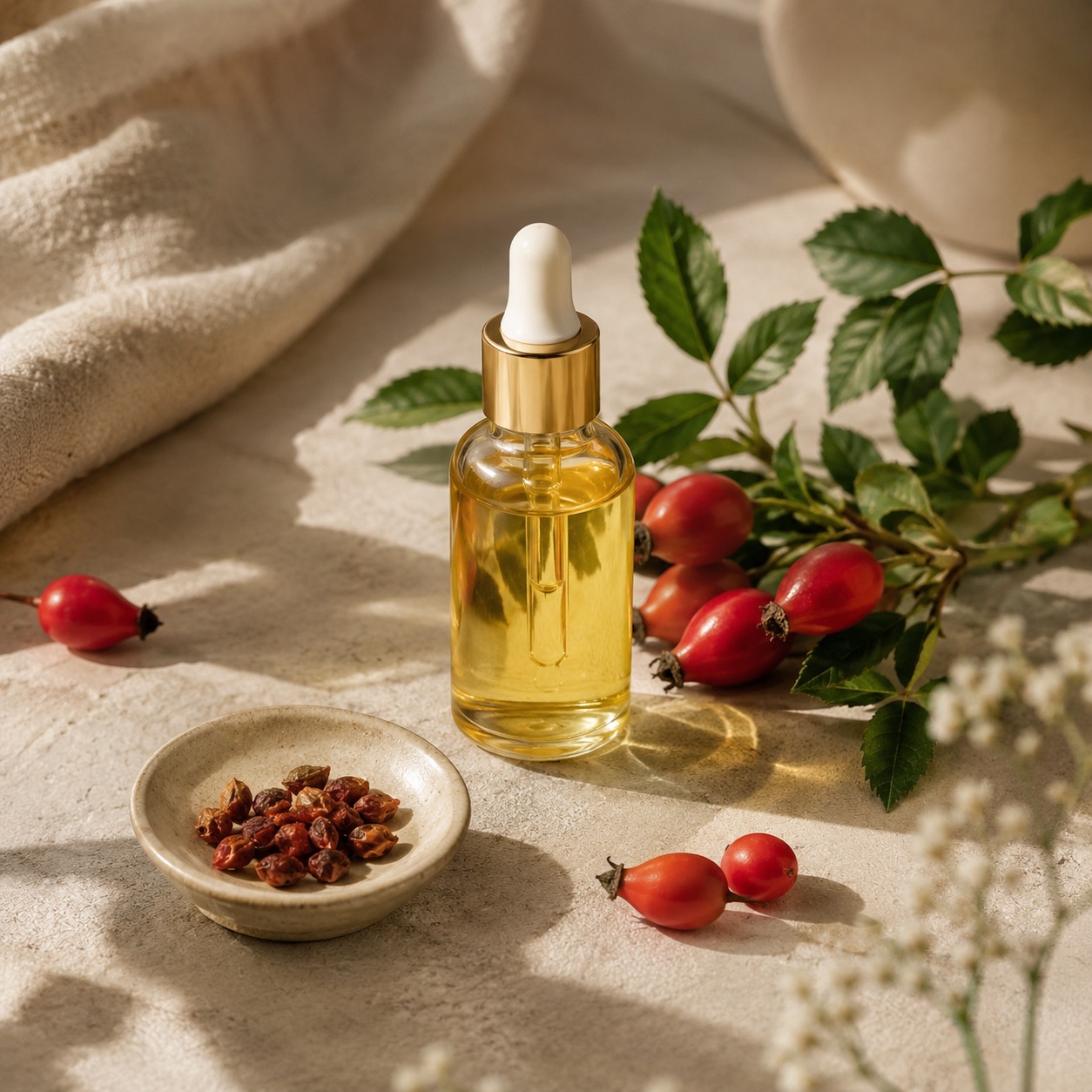
Replenish the barrier. Lipid-rich plant oils with high linoleic acid and gentle, well-tolerated fatty acid profiles help restore what hormonal change has depleted. Oils built around sunflower, sweet almond, jojoba, argan, rosehip, raspberry seed, and pumpkin seed are particularly well-suited to reactive menopausal skin.
Step back from harsh actives temporarily. If your skin is in a reactive phase, this is often not the moment for daily exfoliation or aggressive retinoid use. The barrier needs to rebuild first. Stronger actives can return, gently, once the skin feels calm again.
Give it time. Sensitivity caused by barrier depletion responds to consistent care over weeks. The skin that feels reactive in July is often noticeably calmer by September if the right inputs are provided steadily.
When Sensitivity Means Something Else
Not all skin sensitivity in midlife is hormonal. A few patterns are worth flagging to a doctor or dermatologist.
Persistent redness that does not improve with gentle care could indicate rosacea, which can emerge or worsen around menopause. Dry, scaly, intensely itchy patches could suggest eczema or another skin condition. New, severe reactions to specific products may warrant patch testing for contact allergy. Sudden widespread itching without visible rash deserves a medical check to rule out internal causes.
Most menopausal sensitivity is genuinely the kind that responds to barrier support and patience. But the skin is also a window into the rest of the body, and it is always worth taking persistent or severe changes seriously.
A Quieter Approach to Sensitive Menopausal Skin
Most skincare aimed at women over 45 still leans on the language of strength. Strong actives. Powerful results. Targeted correction. For skin that is becoming more reactive, this language can be precisely the wrong invitation.
The biology suggests something different. Menopausal skin tends to respond best to gentleness and consistency rather than intensity. Fewer ingredients chosen carefully. Lipids that the barrier can use. Routines that calm rather than provoke.
Baya was built around this philosophy. Skincare for women in perimenopause and menopause should meet the skin where it actually is, with the materials it can use, in formulations that respect rather than override its current sensitivity.
The aim is not to suppress the skin's reactions. It is to give the skin enough support that the reactions become unnecessary.
The Bottom Line
If your skin has become more sensitive in your forties or fifties, the cause is almost certainly hormonal rather than personal.
Estrogen has been quietly regulating barrier integrity, inflammation, repair, and nerve sensitivity for decades. As it declines, the systems that kept your skin tolerant of everyday inputs slow at the same time. Products, fabrics, water temperatures, and ingredients that were once invisibly fine begin to register.
The good news is that this is highly responsive to the right care. A simpler routine. Gentler cleansers. Lipid replenishment. Lower water temperatures. Patience over weeks rather than days. The skin that feels reactive now is the same skin that, with the right support, becomes comfortable again.
You have not developed bad skin. Your skin has changed its needs, and once those needs are met, the sensitivity tends to recede.
Frequently asked questions
Most often because of hormonal change. Declining estrogen reduces the skin's barrier integrity, its ability to regulate inflammation, and its repair speed. The result is skin that reacts more to inputs that were once tolerated easily.
Yes, very commonly. Many women who have never had sensitive skin develop reactivity for the first time during perimenopause and menopause. It is one of the most underdiscussed symptoms of the hormonal transition.
Because the barrier is thinner and more permeable than it used to be. Ingredients that once stayed on the surface now reach the deeper layers of skin more easily, where they can trigger small inflammatory responses. The product has not changed. The skin's threshold for reacting to it has.
Significantly. Estrogen supports barrier lipids, helps regulate inflammation, modulates nerve sensitivity, and supports repair. As it declines, all four of these mechanisms slow, which is why sensitivity often appears or worsens with the menopausal transition.
Simplify the routine, switch to gentle cleansers, lower water temperatures, replenish the barrier with lipid-rich oils, and step back from harsh actives temporarily. Most reactive menopausal skin becomes substantially calmer within four to eight weeks of consistent gentle care.
In most cases the reactivity becomes much more manageable once the barrier is restored, even though the underlying hormonal change is permanent. Many women find their skin returns to a comfortable baseline with the right routine, even if it is no longer quite as forgiving as it was at 30.
More from The Baya Journal