Skin Science · 7 min read
Rosehip Oil and Linoleic Acid: What the Research Actually Says
The science behind rosehip oil and its linoleic acid content, and why this quiet classic has become so valuable for mature and menopausal skin.
Three things to know
A Quiet Heritage with Modern Validation.
Where Rosehip Oil Comes From.
What Linoleic Acid Does for Skin.
Rosehip oil has quietly earned its place in skincare. It has been used for generations across South America, valued in traditional Andean medicine long before the modern industry took an interest. In recent decades, science has begun to confirm what generations of women already knew: that something about the oil pressed from this small wild fruit works in a way few other plant oils do.
The story behind it is not one of inflated promises. It is one of biology and patience. The more closely researchers look at how rosehip oil interacts with the skin, the more its reputation makes sense.
What follows is the considered version. The reasons rosehip oil has become a genuinely important ingredient for mature and menopausal skin, and what the linoleic acid at its heart is actually doing.
A Quiet Heritage with Modern Validation
Rosehip oil's origins reach back centuries. Indigenous communities in the Andes used it for skin healing long before clinical research existed to explain why it worked. The oil was applied to wounds, scars, dryness, and the marks left behind by sun and weather. The results were consistent enough to become part of an inherited skin care tradition.
What is striking is how well that traditional use has held up against modern investigation. Where many heritage ingredients have proven less remarkable under scientific scrutiny, rosehip has done the opposite. Each layer of research has clarified, rather than diminished, the reasons it works.
The ingredient earned its reputation honestly. The science is now catching up.
Where Rosehip Oil Comes From
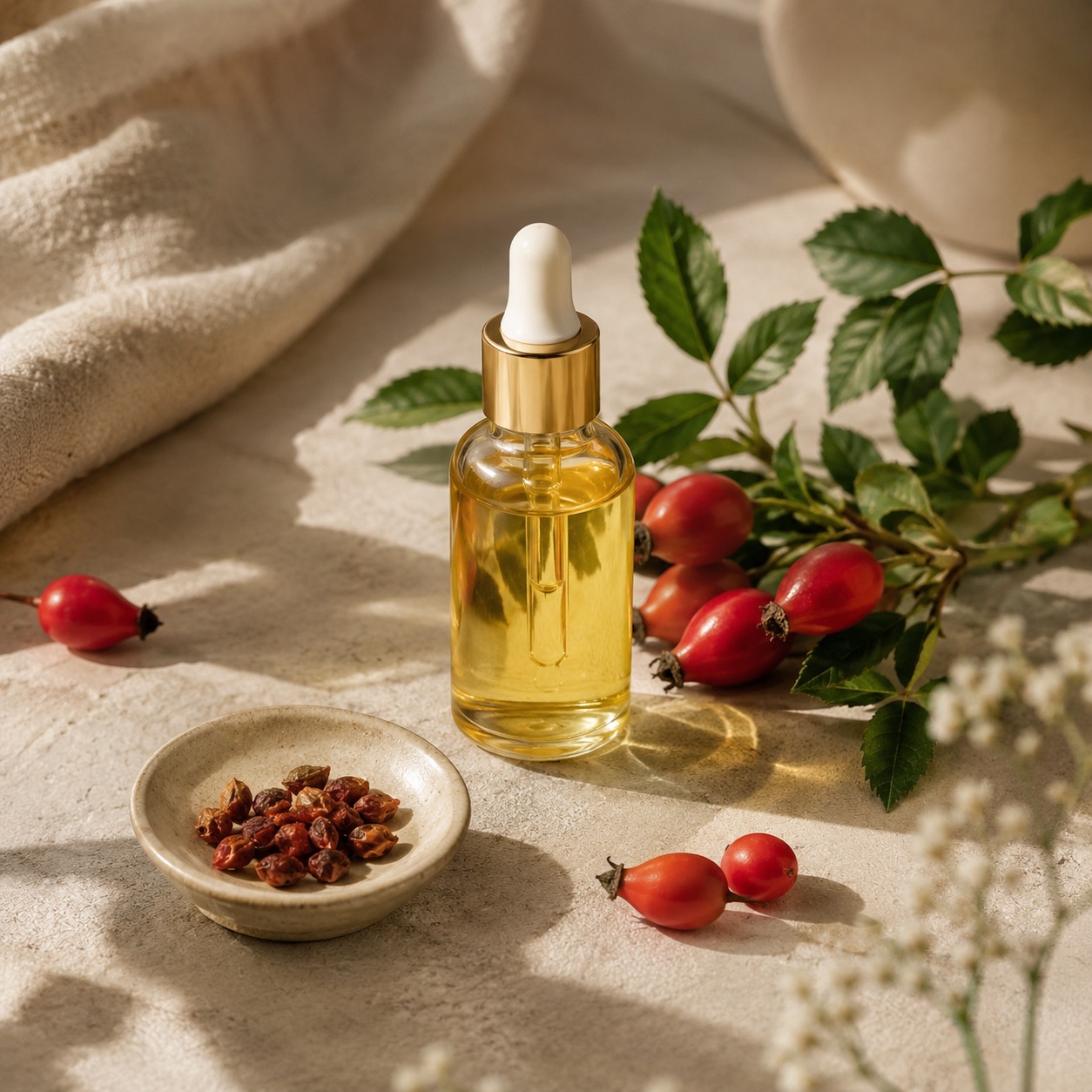
Rosehip oil is cold-pressed from the seeds of wild rose plants, most often Rosa canina or Rosa rubiginosa. The fruit itself, the rosehip, is what remains on the plant after the petals fall. The oil is sometimes more precisely called rosehip seed oil, which distinguishes it from rose oil, a fragrance-grade essential oil distilled from rose petals.
The plant grows wild across parts of South America, Eastern Europe, and the highlands of Lesotho. Chilean rosehip is widely considered the gold standard for skincare, prized for the richness of its fatty acid profile and the depth of its natural antioxidants.
The method of extraction matters. Cold-pressing preserves the delicate compounds that give rosehip its character. Heat-extracted or refined rosehip oil loses much of what makes the ingredient special. The best skincare formulations use only cold-pressed, unrefined rosehip from carefully sourced harvests.
What Linoleic Acid Does for Skin
Before the rosehip part of the story, the linoleic acid part deserves attention, because this is where the real biology lives.
Linoleic acid is an essential omega-6 fatty acid. The word essential is technical, not promotional. It means the body cannot produce linoleic acid on its own. It must come from outside, either through diet or, in the case of skin, through topical application.
In the skin, linoleic acid plays a quietly central role. It is the building block of a particular family of ceramides called acylceramides, which are essential to the integrity of the skin barrier. With adequate linoleic acid, the skin can synthesize these ceramides well. Water stays in. Irritants stay out. The barrier remains supple, comfortable, and resilient. Without enough linoleic acid, the barrier struggles. Water escapes faster. Reactivity increases. Recovery slows.
The relationship between linoleic acid and barrier function is one of the more thoroughly established areas of skin science. It is not in any way speculative. It is foundational.
This is why an oil rich in linoleic acid is not simply pleasant on the skin. It is biologically useful in a specific, measurable way.
The Linoleic Acid Profile of Rosehip Oil
What sets rosehip oil apart from other plant oils is the sheer concentration of essential fatty acids it delivers.
A high-quality cold-pressed rosehip seed oil typically contains:
- Around 40 to 55 percent linoleic acid (omega-6)
- Around 25 to 35 percent alpha-linolenic acid (omega-3)
- A smaller proportion of oleic acid
- Natural tocopherols (vitamin E)
- Carotenoids, including beta-carotene
- A range of polyphenols and antioxidants
Few plant oils used in skincare offer this fatty acid composition. Most are dominated by oleic acid, which is wonderful for softness but does less of the specific barrier-building work that linoleic acid does. Rosehip's polyunsaturated dominance is unusual, and it is precisely what gives the oil its functional power for skin that has lost its lipid integrity.
The omega-3 content is a meaningful bonus. Alpha-linolenic acid supports skin calmness and contributes to the broader anti-inflammatory environment that mature skin benefits from.
What the Research Supports
The body of evidence behind rosehip oil is reassuringly broad. A few areas stand out.
Barrier function. Topical linoleic acid clearly supports barrier repair, particularly in skin depleted in essential fatty acids. Rosehip oil's high linoleic content makes it one of the more effective single-ingredient sources of this support.
Reduced water loss. Studies on oils rich in linoleic acid, rosehip among them, show measurable reductions in transepidermal water loss with consistent application. The skin holds water more effectively. The tight, dehydrated feeling many women experience after washing is noticeably reduced.
Scar appearance and skin healing. Several clinical studies have examined rosehip oil specifically in the context of surgical scars, burns, and post-inflammatory marks. The findings are consistent. Rosehip supports better-quality healing and improves the appearance of marks over time, likely through a combination of barrier support, fatty acid delivery, and antioxidant content.
Texture and tone. Consistent use of rosehip oil is associated with smoother texture and more even tone, including improvements in mild hyperpigmentation. The effects accumulate over months rather than days, which is itself a good sign. Lasting change rarely happens overnight.
Antioxidant protection. The natural tocopherols and carotenoids in cold-pressed rosehip oil offer real antioxidant support, which matters for skin facing the cumulative oxidative stress of daily life.
Calming and comfort. The omega-3 content contributes to a calmer skin environment. Many women describe rosehip-rich formulas as noticeably comforting on reactive or easily irritated skin.
This is a substantial list. It is grounded in research that has been quietly accumulating for decades.
Why This Matters Especially for Mature and Menopausal Skin
There is a particular reason rosehip oil has become such a valued ingredient for women in perimenopause and menopause.
Mature skin tends to shift in its fatty acid composition. The ratio of oleic acid to linoleic acid often increases with age, which is associated with a less robust barrier, lower ceramide synthesis, and more reactive skin. This is one of the quieter biological changes underneath the more familiar symptoms of menopausal dryness.
Topical linoleic acid, delivered through oils rich in it, helps correct this shift. The skin uses what it is given. When linoleic acid arrives consistently at the barrier, ceramide synthesis recovers. The mortar between skin cells thickens. The barrier becomes more capable of doing the work it is meant to do.
Rosehip oil happens to be one of the most effective ways of delivering this specific fatty acid to skin that needs it. The match between what mature skin is missing and what rosehip provides is remarkably close.
This is the heart of the case for rosehip in menopausal skincare. Not as a trend, not as a hero ingredient marketed in isolation, but as a deeply compatible source of the specific compound the skin is asking for.
How Rosehip Oil Works Best
A few practical notes worth knowing.
Cold-pressed quality matters. Heat-extracted or refined rosehip loses the antioxidants and fatty acid integrity that give the oil its value. Look for cold-pressed, unrefined, and preferably organic.
Stability comes from blending. Rosehip oil's rich polyunsaturated content makes it most beautiful when paired with more stable companion oils and natural vitamin E. A thoughtfully formulated blend protects rosehip's potency and extends its shelf life while broadening the fatty acid profile delivered to the skin.
Synergy strengthens the effect. Rosehip works particularly well alongside sweet almond, jojoba, argan, sunflower, raspberry seed, and pumpkin seed oils. Each contributes something complementary. Together they offer the full spectrum of fatty acids and nutrients that mature skin benefits from.
Consistency rewards patience. Rosehip oil delivers its benefits gradually. Daily application over weeks produces real, visible change. The most striking improvements in texture, tone, and comfort tend to appear between four and twelve weeks of steady use.
The Baya Perspective
Baya was built around the idea that menopausal skin deserves formulations grounded in what the skin can genuinely use, prepared with care and chosen for biological compatibility rather than marketing momentum.
Rosehip oil is part of the Baya blend because the evidence for what it does, particularly its contribution of linoleic acid to a barrier in need of it, is among the strongest in the category. It is paired with sunflower, sweet almond, jojoba, argan, raspberry seed, and pumpkin seed oils so that the formula offers more than any single ingredient could on its own. Each oil brings something the others do not. Together, they create a blend that meets mature skin where it is.
The aim is not to celebrate a single hero. The aim is to give the skin what it has been missing, in the proportions and pairings that actually work.
The Bottom Line
Rosehip oil has earned its place in skincare slowly and honestly, through centuries of traditional use and decades of accumulating research.
Its linoleic acid content is among the highest of any cold-pressed plant oil, which makes it especially useful for skin that has lost the specific fatty acid most central to barrier health. The omega-3 content, the natural antioxidants, and the documented benefits in healing and skin tone add to the picture.
For women navigating menopausal skin changes, rosehip oil is one of the more biologically intelligent ingredients available. Applied consistently, as part of a thoughtful blend, it does precisely the kind of quiet, foundational work that mature skin responds to most reliably.
The ingredient is not loud. It is something better: well understood, well evidenced, and genuinely useful.
Frequently asked questions
Rosehip oil is particularly valued for supporting the skin barrier, reducing water loss, improving texture and tone, supporting the appearance of scars and marks, and providing antioxidant protection. Its high linoleic acid content makes it especially compatible with mature skin.
Linoleic acid is an essential fatty acid that the skin uses to produce ceramides, which hold the barrier together. Skin with adequate linoleic acid retains water more effectively, resists irritation, and recovers from daily wear more quickly.
Yes, and particularly so. Mature skin often has a fatty acid profile that has shifted away from linoleic acid, which weakens the barrier. Rosehip oil's high linoleic content directly addresses this shift, making it one of the most useful ingredients for women over 45.
Rosehip oil can improve texture, tone, and the appearance of fine lines over consistent use, largely through better barrier function and antioxidant support. The improvements accumulate over months rather than days, but they are real and visible.
Rosehip oil is generally well-tolerated and is considered non-comedogenic for most skin types. Reactions are uncommon and usually relate to oxidized or low-quality oils rather than to rosehip itself, which is why quality and stability matter so much.
Most women notice softer, less reactive skin within a few weeks of consistent daily use. Visible improvements in texture, tone, and crepiness usually appear between four and twelve weeks of steady application.
More from The Baya Journal