Skin Science · 7 min read
Why Moisturiser Stops Working During Menopause
Menopausal skin loses lipids, not just water. Here is why your usual moisturiser stops working after 45, and what genuinely helps a depleted skin barrier.
Three things to know
Why Menopausal Dry Skin Feels Different After 45.
The Estrogen Connection No One Explains Clearly Enough.
What Happens to the Skin Barrier During Menopause.
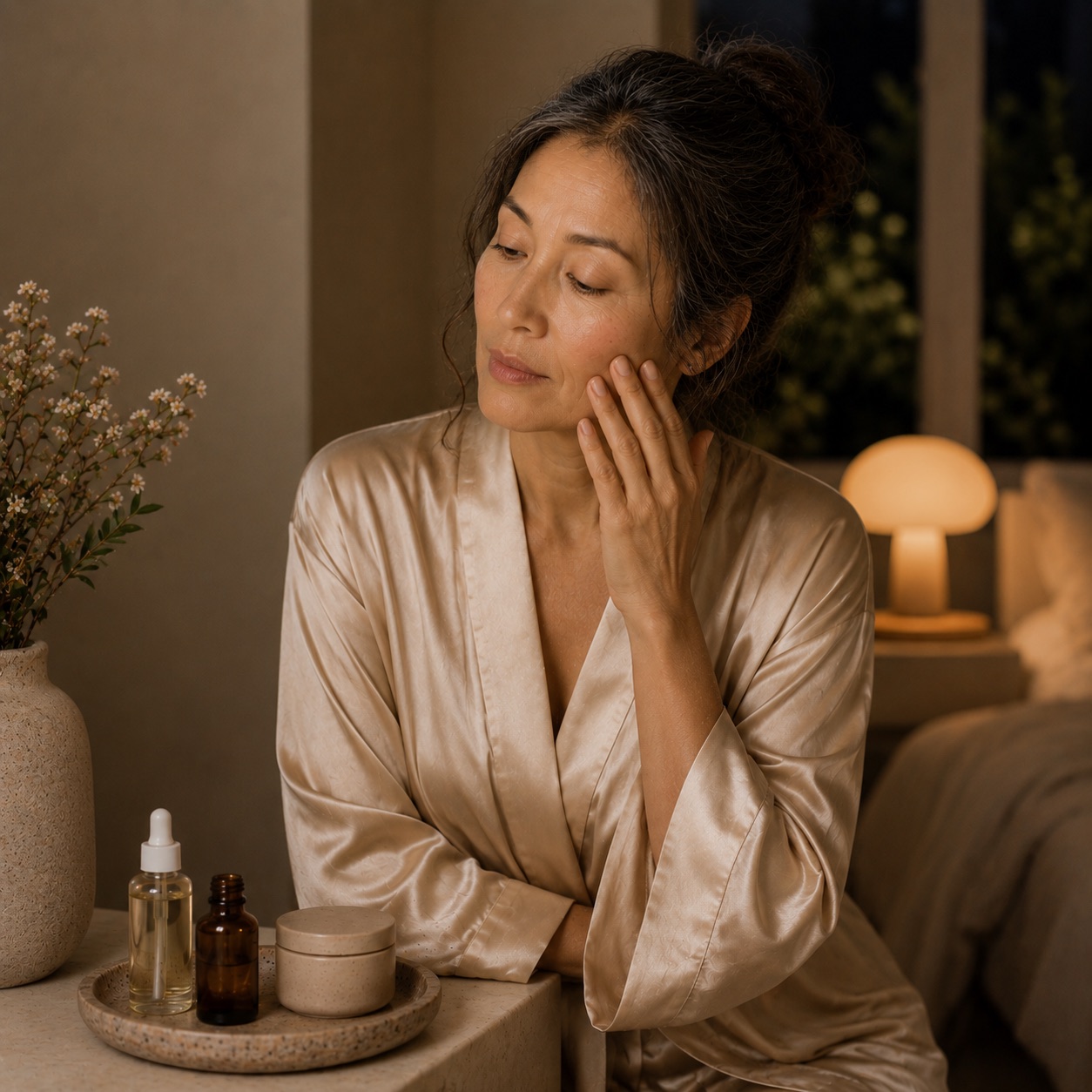
It usually starts with a quiet suspicion. The lotion you have used for years still smells the same, still spreads the same way, still feels familiar in your hands. But something has shifted. Within an hour of applying it, your shins feel dry again. Your forearms develop that faint, papery tightness by mid-afternoon. You reach for the bottle a second time, then a third, and still your skin seems to drink it without ever really softening.
For many women in their late forties and fifties, this is one of the first physical signals that something deeper is changing.
It is not the moisturiser. It is the skin underneath it.
Why Menopausal Dry Skin Feels Different After 45
The dryness that arrives with perimenopause and menopause is not a more intense version of the dryness you remember from your thirties. It is a different category altogether.
Younger skin tends to become dry on the surface, where humidity, weather, or harsh cleansers strip the outermost layer. The fix is usually quick. A richer cream, a humidifier, a few days of consistency, and the skin softens again.
Menopausal skin behaves differently because it is being remodelled from the inside.
The dryness is not sitting on top of healthy skin waiting to be hydrated. It is a symptom of structural change happening across the entire dermis. The skin you are trying to moisturise has, in a real sense, become a different organ than it was a decade ago.
This is why the products that worked beautifully at 38 can feel curiously ineffective at 52.
The Estrogen Connection No One Explains Clearly Enough
Estrogen does a quiet, enormous amount of work for the skin. It signals fibroblasts to produce collagen. It supports hyaluronic acid synthesis. It encourages sebum production. It helps regulate the lipids that hold the skin barrier together. It influences how quickly skin cells turn over and how efficiently the skin repairs itself after small daily insults like friction, sun exposure, or hot water.
When estrogen begins to decline in perimenopause and drops more sharply during menopause, all of these processes slow at once.
Within the first five years of menopause, women can lose up to 30 percent of their dermal collagen. Skin thickness decreases by roughly 1 to 2 percent per postmenopausal year. Sebum production falls. The natural lipid film that once kept moisture sealed in becomes patchier and thinner.
Your skin is not failing. It is responding, intelligently, to a hormonal landscape that has fundamentally changed.
What Happens to the Skin Barrier During Menopause
The outermost layer of skin, the stratum corneum, works like a brick wall. Skin cells are the bricks. The mortar between them is made of lipids, primarily ceramides, cholesterol, and free fatty acids, held together in a precise ratio. This mortar is what keeps water inside the skin and irritants out.
During menopause, two things happen at once.
First, the lipid mortar thins. Ceramide levels decline. The ratio of barrier lipids becomes less optimal. Tiny gaps form between cells where there used to be a continuous seal.
Second, transepidermal water loss increases. This is the technical term for the slow evaporation of water from inside the skin out into the air. A healthy barrier slows this evaporation. A depleted barrier cannot. Water that should be staying in the deeper layers leaves more quickly, leaving the skin tight, rough, and reactive.
This is the core reason moisturiser stops working the way it used to.
Most conventional lotions are designed to add water to the surface of the skin and trap it there briefly. They work beautifully on a barrier that is already intact. They struggle on a barrier that has gaps in its mortar, because the water they deliver evaporates almost as quickly as it goes on.
Why Lotion Alone Cannot Fix a Depleted Barrier
This is the part of the conversation that often gets skipped.
Most body lotions are water-based emulsions. Water is the first ingredient. A small percentage of oils and emollients is suspended within it, along with humectants like glycerin that draw moisture toward the skin.
On younger skin, this is a sensible design. The barrier holds the water in. The humectants do their job. The skin feels soft for hours.
On menopausal skin, the same formula behaves differently. The water in the lotion absorbs and then evaporates. The humectants, in low-humidity environments, can actually pull moisture upward from the deeper layers of skin rather than drawing it in from the air, which can leave the skin drier than before. The oil content is often too low to genuinely replenish what the barrier has lost.
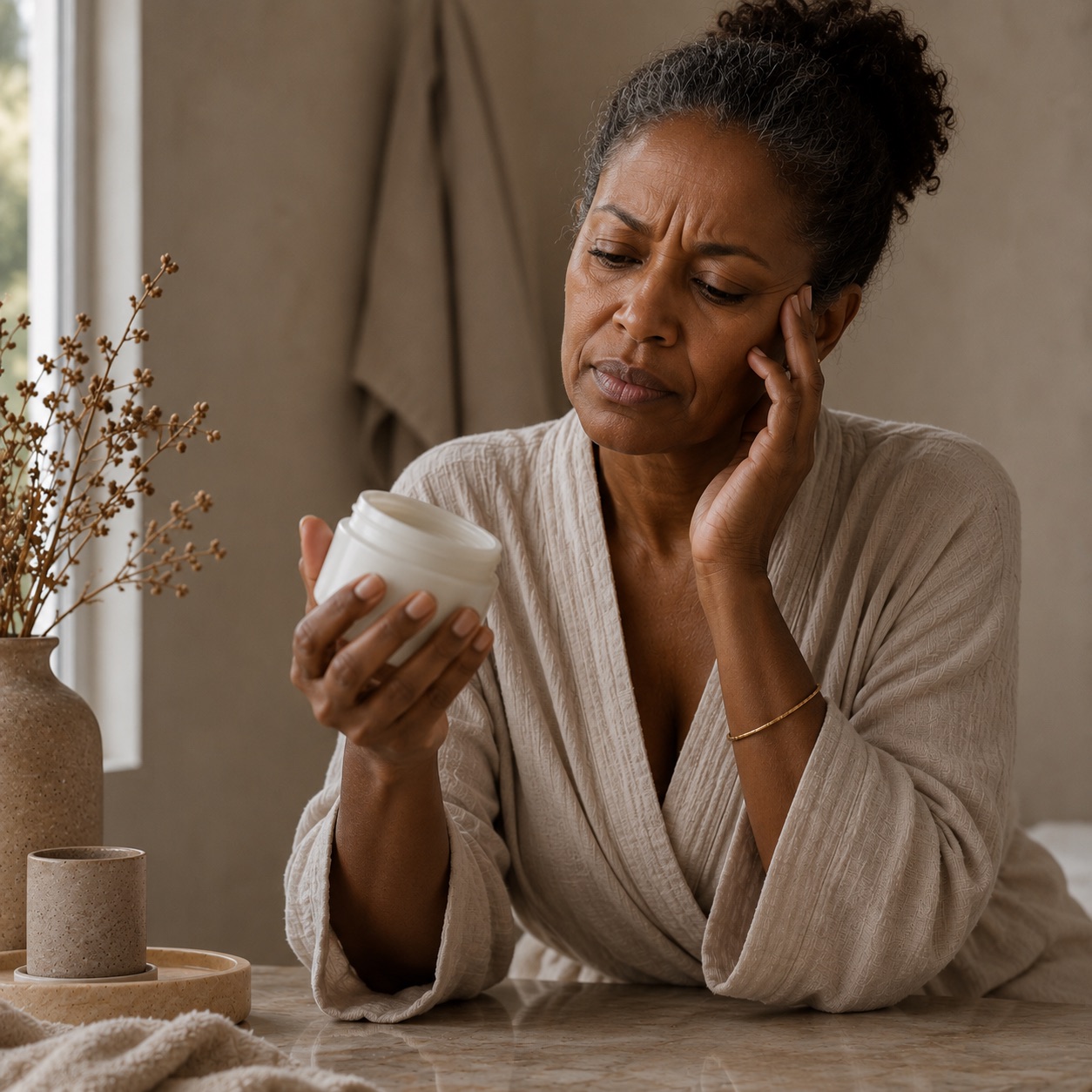
You can feel this happening in real time. The application feels pleasant. Twenty minutes later your skin is tight again. You apply more. The cycle repeats.
The problem is not that you need more moisturiser. The problem is that your skin needs different things now. Lipids, not just water. Repair, not just hydration.
Why Body Skin Becomes More Fragile After 50
Facial skin tends to receive most of the cultural and clinical attention, but body skin undergoes the same hormonal changes with even less support.
The skin on the arms, legs, chest, and back has fewer sebaceous glands to begin with. The shins and forearms are particularly low in oil glands, which is why these areas often show the first signs of menopausal dryness. The chest, with its thinner skin and decades of cumulative sun exposure, can develop a fine crepey texture. Knees and elbows roughen. Hands lose their suppleness.
You may notice:
- skin feeling tight within minutes of stepping out of the shower
- itchy legs at night, particularly in winter
- fabrics that once felt soft now feeling scratchy against the arms or thighs
- a faint papery quality on the shins despite daily lotion use
- redness or irritation from products you have tolerated for years
None of these are signs that you are doing something wrong. They are signs that the skin is asking for a different kind of care.
What Menopausal Skin Actually Needs
The skincare conversation around menopause often defaults to language about reversing or fighting. Skin biology does not particularly respond to either. It responds to what it is given.
What it needs, specifically, is lipid replenishment.
The lipids that have thinned in the barrier are not exotic. They are the same fatty acids and plant-derived compounds that have been used in traditional skincare for centuries: linoleic acid, oleic acid, ceramide precursors, squalene, vitamin E, phytosterols. These compounds slot into the depleted areas of the barrier and help restore the seal that holds water in.
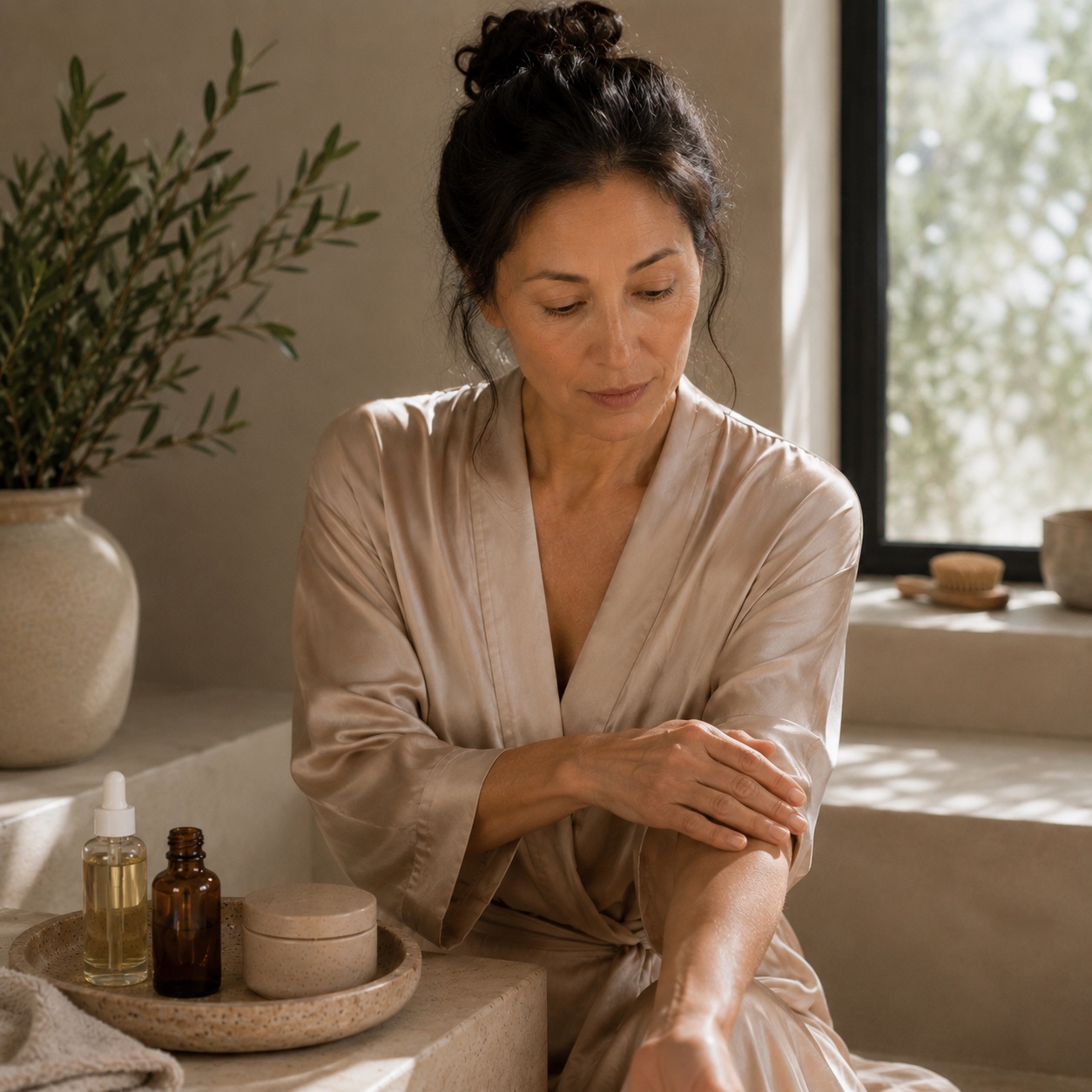
This is why plant oils, when chosen carefully, often outperform conventional lotions on menopausal body skin. A well-formulated body oil delivers concentrated lipids directly to the barrier without the water phase that evaporates so quickly. The skin softens not because something has been added on top of it, but because something has been replenished within it.
Which Oils Support Menopausal Skin
Not all oils are interchangeable. The fatty acid profile of each oil determines how well it integrates into the barrier.
A few worth knowing:
- Sunflower oil is rich in linoleic acid, which is essential for ceramide production and barrier integrity. Linoleic acid tends to be lower in mature skin, which makes its replenishment particularly relevant.
- Sweet almond oil is gentle, well-tolerated, and high in oleic acid and vitamin E, providing softening without heaviness.
- Jojoba is technically a wax ester rather than an oil, which makes it structurally similar to the skin's own sebum and unusually compatible with depleted skin.
- Argan offers a balanced fatty acid profile alongside vitamin E and squalene.
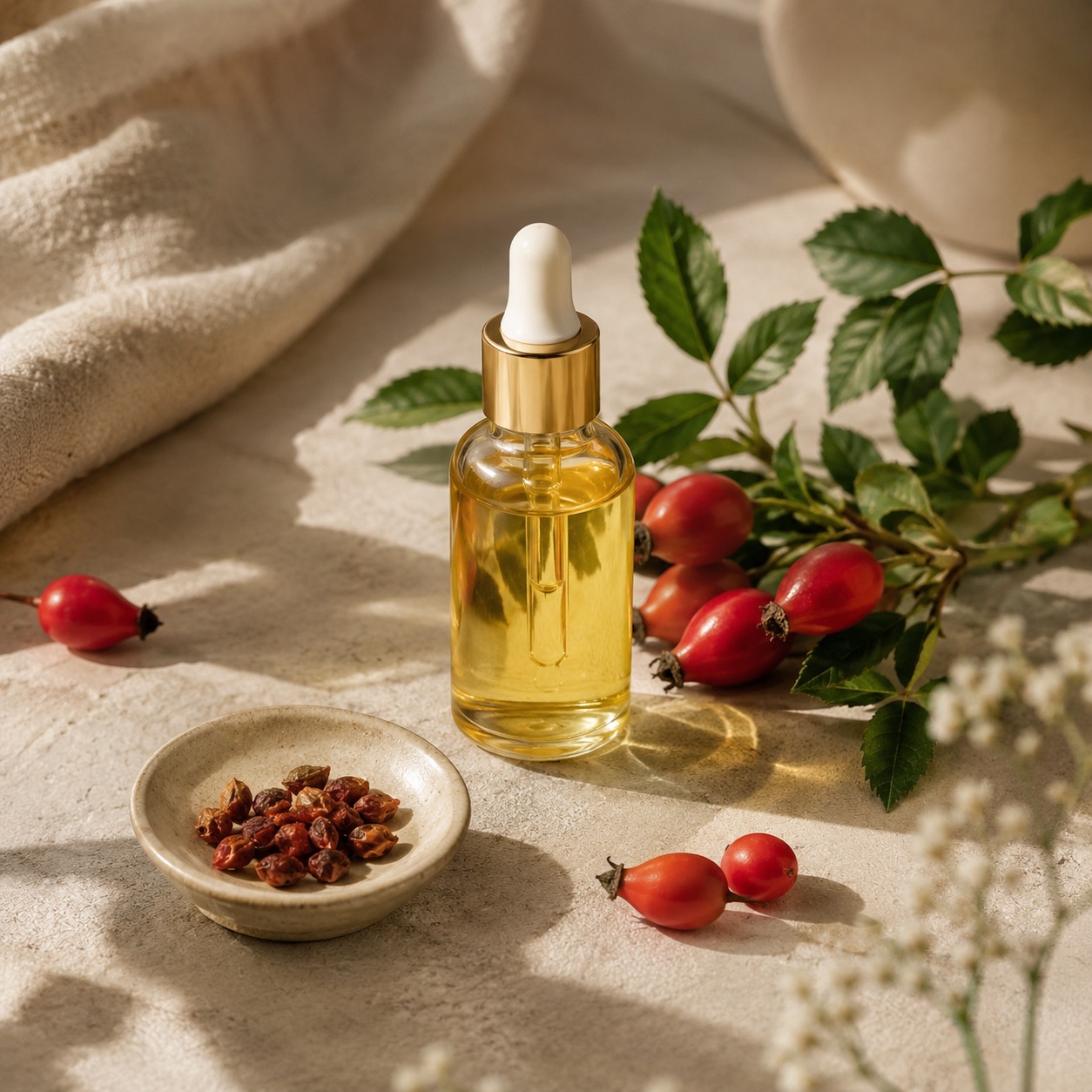
- Rosehip contains trans-retinoic acid precursors and high levels of essential fatty acids that support skin renewal.
- Raspberry seed oil is rich in omega-3 fatty acids and antioxidants.
- Pumpkin seed oil offers zinc, magnesium, and a fatty acid profile that supports calm, hydrated skin.
A formula built from a thoughtful combination of these oils works with the biology of menopausal skin rather than against it.
Why Consistency Matters More Than Intensity
One of the gentler truths of menopausal skincare is that the barrier rebuilds slowly. It does not respond to harshness or urgency. It responds to repeated, calm application of the right materials.
The best routines for menopausal body skin tend to be unhurried. Applied to slightly damp skin after a warm, not hot, shower. Repeated daily, particularly in the colder months. Combined with gentler cleansers that preserve rather than strip the lipids you are trying to replace.
There is no urgency in barrier repair, only patience. But the patience is rewarded. Skin that has felt tight and reactive for months often begins to soften within a few weeks of consistent lipid replenishment.
A Quieter Approach to Menopausal Skincare
Most of the skincare aimed at women over 45 still speaks in the vocabulary of correction. The assumption is that something has gone wrong and must be fixed.
The biology suggests something different. The skin is doing what skin does in the absence of estrogen. It is not broken. It is asking for a different kind of attention.
Baya was built around this idea. That women navigating perimenopause and menopause deserve skincare that takes the specific biology of their skin seriously, without the language of reversal or rescue. The aim is to support the skin in what it is actually doing, with the lipids and fatty acids it can use.
This is what gentler, more biologically intelligent skincare looks like. It is not glamorous. It is precise.
The Bottom Line
If your moisturiser has stopped working, it is almost certainly not the moisturiser's fault, and it is certainly not yours.
Menopausal skin has lost lipids, not just water. A water-based lotion cannot replace what is missing in the barrier itself. The shift that helps most women is a shift in the kind of product they use, from water-heavy lotions to lipid-rich oils that genuinely replenish what hormonal changes have taken away.
The skin you have now is still responsive. It just needs different inputs than it used to.
Frequently asked questions
Estrogen decline reduces the lipids that hold the skin barrier together. Most lotions are water-based and rely on an intact barrier to keep that water in. When the barrier is depleted, the water evaporates faster than the lotion can deliver it, leaving the skin tight again within an hour or two.
Yes. A thinner, lipid-depleted barrier is less able to keep irritants out. Products, fabrics, and ingredients that were comfortable for decades can begin to cause stinging, itching, or redness. This usually improves once the barrier is replenished.
Because most lotions add water rather than lipids. Menopausal skin is missing both, but it is the lipid loss that drives the cycle of repeated application. Replacing the missing fatty acids with a well-formulated body oil tends to break that cycle.
Significantly. Estrogen supports sebum production, ceramide synthesis, and hyaluronic acid levels in the skin. As it declines, all three drop, which is why hydration suddenly becomes harder to hold onto after 45.
Lipid-rich plant oils that match the fatty acid profile of healthy skin. Sunflower, jojoba, sweet almond, argan, rosehip, raspberry seed, and pumpkin seed oils all deliver linoleic acid, oleic acid, and antioxidants that support the barrier directly.
For most women in perimenopause and menopause, yes. Body oils deliver concentrated lipids without the water phase that evaporates quickly, which makes them more effective at replenishing the specific things menopausal skin has lost.
More from The Baya Journal