Skin Science · 9 min read
What Happens to Collagen During Menopause?
What menopausal collagen decline actually looks like, the numbers behind it, and the honest list of what helps preserve skin structure after 45.
Three things to know
What Collagen Actually Is.
The Estrogen and Collagen Connection.
The Numbers Behind the Decline.
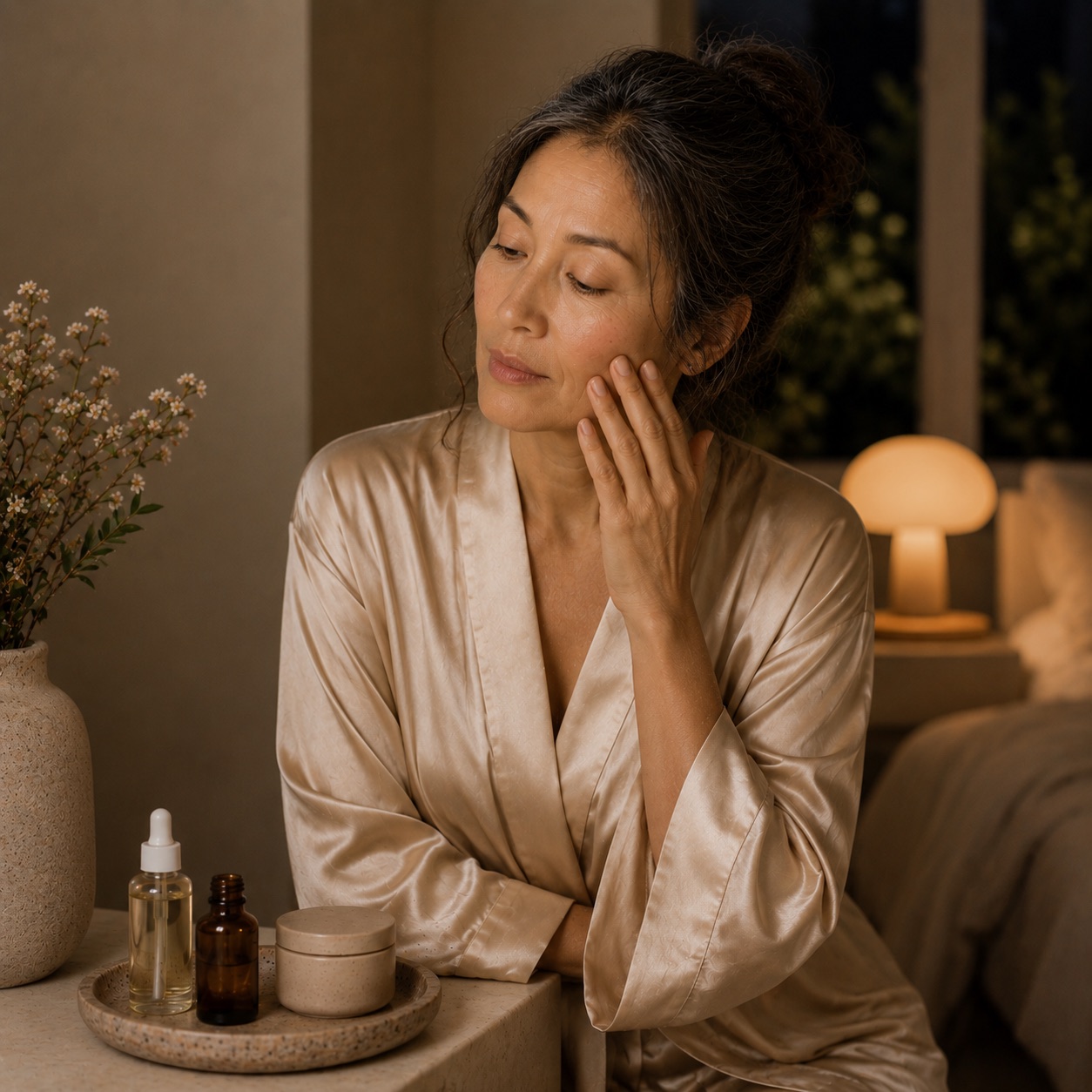
There is a moment many women describe in similar terms. The reflection in the mirror in honest morning light. The way the skin no longer quite snaps back when pinched at the back of the hand. A softening along the jawline that was not there a year ago. The faint crepey quality across the chest in the V-neck of a favourite blouse.
These are not subtle changes, but they are not dramatic either. They are the visible signature of a quiet structural shift happening deeper in the skin. The shift has a name. It has a timeline. And once understood, it makes the experience of menopausal skin make sense in a way that everyday observation alone never quite does.
What is happening is collagen loss. And while the decline cannot be entirely reversed, it can be slowed, preserved, and worked with intelligently. The first step is understanding what is actually going on.
What Collagen Actually Is
Collagen is the most abundant protein in the human body. It is the structural material that gives skin its firmness, plumpness, and ability to recover from being stretched or compressed. If the skin's lipid barrier is its outer wall, collagen is its scaffolding, the underlying framework that determines how the wall is held up.
The skin contains several types of collagen, but two dominate: type I, which makes up roughly 80 percent of dermal collagen, and type III, which makes up most of the rest. Both are produced by specialized cells called fibroblasts, which live in the dermis, the middle layer of the skin.
When you press a young palm and watch the skin spring back instantly, you are watching collagen and elastin doing their work. When the same pinch on a hand of 55 takes a moment longer to recover, you are observing what has changed underneath.
The Estrogen and Collagen Connection
The relationship between estrogen and collagen is one of the more biologically intimate connections in skin science.
Fibroblasts, the cells that produce collagen, carry estrogen receptors on their surface. When estrogen circulates in the body, it binds to these receptors and signals the fibroblasts to maintain robust collagen production. Estrogen also helps slow the breakdown of existing collagen by moderating the activity of enzymes called matrix metalloproteinases, which degrade collagen fibres as part of normal skin turnover.
In other words, estrogen has been doing two things at once for decades. It has been encouraging new collagen to be made, and it has been protecting the collagen already in the skin from being broken down too quickly.
When estrogen begins its decline in perimenopause and falls more steeply at menopause, both of these effects diminish. Production slows. Degradation accelerates slightly. The balance that kept the skin's structural framework intact for so many years quietly tips.
The Numbers Behind the Decline
The collagen loss of menopause is not gradual in the way most age-related changes are. It is steeper, and it is documented.
Research suggests that women can lose up to 30 percent of their dermal collagen within the first five years after menopause. After that initial acceleration, collagen continues to decline at a rate of roughly 2 percent per postmenopausal year. Skin thickness, which depends in large part on collagen, decreases by approximately 1 to 2 percent per year over the same period.
These are real, measurable changes. They are not subjective impressions or marketing claims. The acceleration around menopause is one of the most consistent findings in the dermatological literature on hormonal aging.
Recognizing this is important for a particular reason. It explains why so many women describe a sudden visible change in their skin during their early fifties that does not match the slower pace they had previously associated with aging. The change is not in their imagination. It is in their biology.
What Collagen Loss Looks Like
The visible signs of collagen decline tend to appear earliest in specific places.
The chest and décolletage. Thinner skin combined with decades of sun exposure means this is often where crepey texture appears first. The fine, papery quality across the V-neckline is collagen and elastin loss made visible.
The backs of the hands. Reduced collagen and subcutaneous volume make the hands look more transparent, with veins more visible and skin that wrinkles slightly when pinched and takes a moment to recover.
The inner arms and forearms. A soft crepiness can develop here, particularly noticeable in changing light.
The face. Fine lines deepen, the jawline softens, and overall facial firmness changes. These shifts are familiar enough that the cosmetic industry has built an entire category around them.
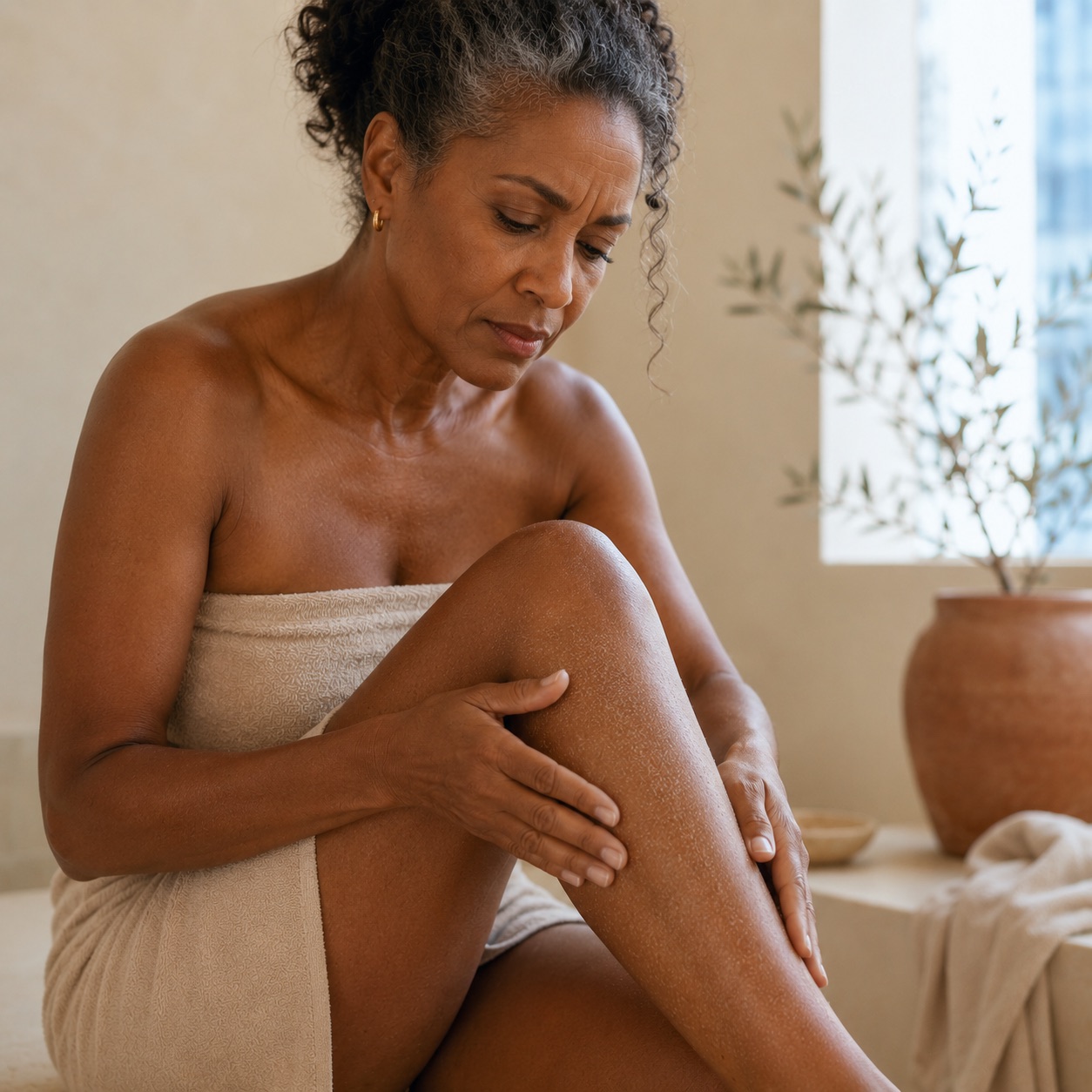
The shins and knees. Often dry and roughened, partly because of barrier issues and partly because of structural thinning.
Beyond the visual, collagen loss also influences how the skin functions. Wound healing slows. Bruising becomes more common. The skin tears more easily. Recovery from small daily insults takes longer than it once did.
Why Body Skin Often Shows This First
Body skin tends to show collagen-related changes earlier than facial skin for several reasons.
It is thinner in many places to begin with. It receives less cosmetic attention and less consistent sun protection. It is subject to friction, stretching, and repeated washing that the face is generally spared.
This is why the chest, the hands, and the arms often signal menopausal collagen change before the face does. By the time the facial signs become unmistakable, the body has often been quietly telling the same story for years.
What the Research Actually Supports
The honest list of what helps protect and support collagen in menopausal skin is shorter than the marketing landscape would suggest, but it is real.
Hormone replacement therapy. Of all interventions, HRT has the strongest evidence for preserving and even partially restoring dermal collagen in postmenopausal women. The decision to use HRT is medical, multifaceted, and personal, but its effects on skin collagen specifically are well documented.
Topical retinoids. Retinoic acid and its over-the-counter cousin retinol stimulate fibroblast activity and can support modest collagen synthesis with consistent long-term use. Lower concentrations and gentler formulations tend to suit menopausal skin best, since aggressive retinoids can compromise an already-thinning barrier.
Vitamin C. Ascorbic acid is an essential cofactor for collagen synthesis. The body cannot make collagen without it. Topical vitamin C in stable forms, applied consistently, supports both collagen production and protection against oxidative damage.
Sunscreen. UV radiation is the single largest external accelerator of collagen breakdown. Daily protection on the face, neck, chest, and hands is one of the most useful long-term habits for collagen preservation.
Adequate protein and key micronutrients. Collagen is made from amino acids. A diet with sufficient protein, vitamin C, zinc, and copper supports the raw materials for fibroblast activity.
Sleep and stress management. Cortisol, the body's primary stress hormone, accelerates collagen breakdown. The quiet, unglamorous work of sleeping well and lowering stress matters more for skin structure than is usually acknowledged.
Oral collagen peptides. The research is still developing, but several studies suggest hydrolyzed collagen peptides taken consistently may modestly support skin elasticity and hydration in postmenopausal women.
This is a respectable list. None of it is dramatic on its own. Together, applied consistently, these interventions slow the rate of loss and preserve the collagen that remains.
What Topical Care Cannot Do
It is worth saying clearly: topical creams that list collagen as an ingredient do not deliver collagen into the skin. The collagen molecule is too large to penetrate the epidermis in a functionally meaningful way. These products may have other useful properties as moisturisers, but they do not rebuild the structural collagen that has been lost.
This is not a failure of the products. It is a feature of the molecule.
The most useful topical approaches for collagen-related change in menopausal skin are not those that claim to deliver collagen, but those that protect existing collagen (sunscreen), support synthesis indirectly (vitamin C, retinoids), or preserve the broader skin environment in which collagen can be maintained (gentle barrier care, reduced inflammation).
The Role of Barrier Support
Barrier support is not usually framed as a collagen strategy, but it has more to do with collagen preservation than is often acknowledged.
When the skin's barrier is compromised, chronic low-grade inflammation rises. Inflammation activates the very enzymes that degrade collagen. A reactive, irritated skin environment is one in which collagen is being broken down faster than it needs to be.
A well-supported barrier, replenished with the lipids and fatty acids the menopausal skin has lost, reduces this inflammatory pressure. Less inflammation means slower collagen degradation. This is the indirect but real connection between daily gentle care and longer-term structural preservation.
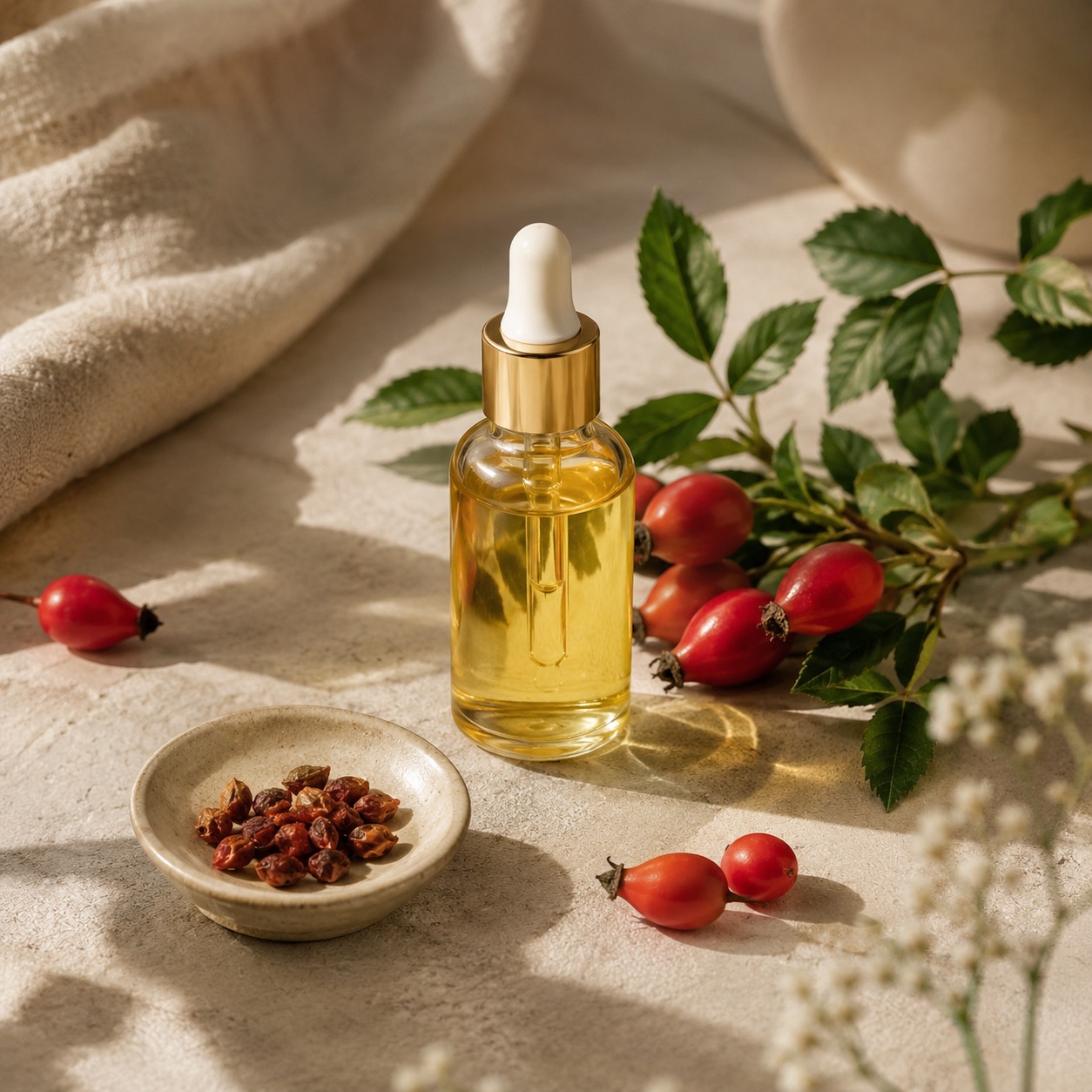
Body oils rich in linoleic acid, oleic acid, omega-3 fatty acids, and natural vitamin E support this kind of barrier maintenance. They do not produce collagen, but they help protect the conditions under which collagen lasts longer.
A Sensible Approach to Collagen in Menopause
The most useful frame for thinking about collagen in midlife is one of stewardship rather than restoration.
The collagen lost in the first five years of menopause is largely lost. The honest position is that no topical product, supplement, or routine returns it in full. What is possible, and meaningful, is slowing the ongoing rate of loss, supporting the collagen that remains, and preserving the broader skin environment so that the structural changes happen as gradually and gracefully as possible.
This means daily sunscreen on the face, chest, and hands. Consistent gentle retinoid use, if tolerated. Vitamin C in some form, topical or dietary. Enough protein and sleep. A barrier kept well replenished with appropriate lipids. The decision, made with a doctor, about whether HRT fits the broader picture.
None of this is dramatic. All of it accumulates.
A Quieter Approach
Baya was built around a particular kind of honesty. Skincare for women in menopause should do what skincare can actually do, with the materials and mechanisms that are real, while being clear about what falls outside its reach.
Baya does not claim to rebuild collagen. No body oil does, regardless of marketing. What Baya does is support the barrier and the wider skin environment in which collagen and elastin function. By replenishing the lipids the menopausal barrier has lost and reducing the inflammatory pressure that accelerates collagen breakdown, a well-formulated body oil contributes to the preservation work that good menopausal skincare quietly relies on.
This is the role barrier support plays in the longer story of menopausal skin. Not the dramatic part. The foundational one.
The Bottom Line
Collagen decline is one of the most significant biological shifts of menopause, and it explains a great deal of what women observe in their skin during this phase.
Up to 30 percent of dermal collagen is lost in the first five years after menopause. The decline continues at roughly 2 percent per year after that. The visible consequences, crepey texture, reduced firmness, slower healing, fine lines deepening, are not imagined. They are the surface signature of estrogen-supported scaffolding diminishing in the dermis below.
The collagen lost cannot be fully restored. But the rate of ongoing loss can be slowed considerably with sun protection, gentle barrier care, supportive nutrients, and where appropriate, medical options like HRT or topical retinoids. The skin you have now is responsive to consistent, intelligent care. The structural changes will happen, but they can happen more gradually, and the broader experience of the skin can remain comfortable and resilient throughout.
The work is not glamorous. It is steady. And steadiness, in this phase of life, is what actually delivers.
Frequently asked questions
Estrogen decline reduces both the production of new collagen and the protection of existing collagen from breakdown. Women can lose up to 30 percent of their dermal collagen in the first five years after menopause, with continued loss of roughly 2 percent per year after that.
Research suggests approximately 30 percent of dermal collagen is lost in the first five years following menopause, with skin thickness decreasing about 1 to 2 percent per postmenopausal year. The pace is steeper in the early years and gradually levels off.
The collagen lost cannot be fully restored, but its ongoing decline can be meaningfully slowed. Hormone replacement therapy, topical retinoids, vitamin C, daily sun protection, and a supportive lifestyle all preserve the collagen that remains and slow further loss.
The evidence on oral collagen peptides is still developing, but several studies suggest modest improvements in skin elasticity and hydration with consistent use in postmenopausal women. Topical collagen creams, however, do not deliver collagen into the skin because the molecule is too large to penetrate.
Body oils do not rebuild collagen, but they support the skin's barrier and reduce the inflammation that accelerates collagen breakdown. This indirect role makes consistent use of a well-formulated body oil a meaningful part of preserving skin texture and resilience over time.
Daily sun protection, consistent gentle retinoid use, topical or dietary vitamin C, adequate protein and sleep, a barrier kept well replenished with appropriate lipids, and a medical conversation about HRT where appropriate. These habits compound and slow the rate of collagen decline considerably.
More from The Baya Journal