
Skin Science · 7 min read
The Real Reason Menopausal Skin Feels Different
Menopausal skin feels different because it is different. The biology behind the shift, why it begins on the body, and what your skin is actually asking for.
Three things to know
A Quiet Shift, Not a Sudden Failure.
Estrogen as the Skin's Quiet Architect.
The Three Changes Happening Underneath.
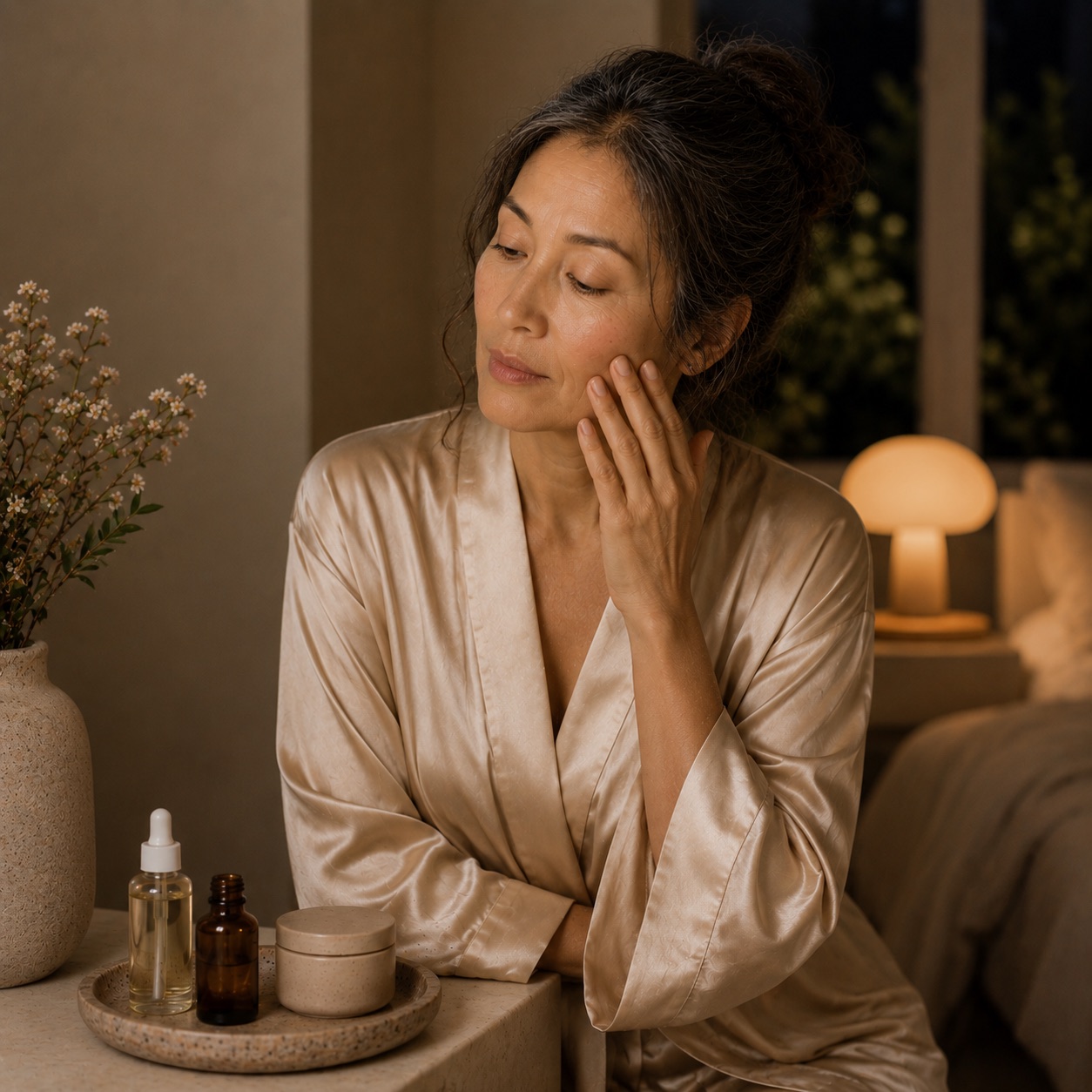
It rarely begins with a single moment. More often it is an accumulation of small recognitions. The skin on your inner arm catching the light in a way it did not before. The faint tightness across your chest after a shower. A texture along the back of your hands that seems to have arrived without warning. You touch your forearm absent-mindedly and notice it feels different against your fingers.
By the time most women put words to it, the change has already been happening for months.
This is the quiet reality of menopausal skin. Not a dramatic decline, not a problem to be solved overnight, but a slow rearrangement of the skin you have lived in for decades.
A Quiet Shift, Not a Sudden Failure
The first thing worth saying is that nothing has gone wrong.
Skin behaves the way skin is biologically designed to behave when its hormonal context changes. It is not failing. It is responding. The challenge is that the response, in modern life, often feels confusing because it does not match the patterns we associate with younger skin. The familiar fixes that worked at 35, a richer cream, a few days of consistency, no longer produce the same results.
This mismatch is what makes menopausal skin feel different in a way that is hard to articulate. The dryness is not really dryness. The sensitivity is not really sensitivity. They are surface symptoms of something happening several layers down, where estrogen used to coordinate a quiet, complex system of repair and replenishment.
Estrogen as the Skin's Quiet Architect
Estrogen is rarely discussed as a skin hormone, but it has been one all along.
It signals fibroblasts to produce collagen. It supports the synthesis of hyaluronic acid. It encourages sebum production. It helps regulate the lipids that hold the barrier together. It supports cell turnover, wound healing, and the skin's ability to retain water. For decades, it has been doing this work invisibly, in the background, while you went about your life.
When estrogen begins its decline in perimenopause and falls more steeply at menopause, none of these processes stops. They all slow. And they slow together, simultaneously, which is why menopausal skin can feel as though several things are changing at once.
Because that is exactly what is happening.
The Three Changes Happening Underneath
There is no single mechanism behind menopausal skin. There are several, each meaningful on its own, more meaningful together.
The Barrier Thins
The outermost layer of skin holds water in the body. It is built like a brick wall, with skin cells as bricks and lipid mortar between them, made primarily of ceramides, cholesterol, and free fatty acids. As estrogen declines, these lipids deplete. The mortar thins. Water that should be staying in the deeper layers begins to evaporate faster than it should.
This is the biology behind that distinct tight, papery feeling many women notice after a shower, and the reason ordinary lotion no longer keeps skin comfortable for as long as it used to.
Collagen and Elastin Decline
Within the first five years of menopause, women can lose up to 30 percent of their dermal collagen. Skin thickness decreases by roughly 1 to 2 percent per postmenopausal year. Elastin fibres, which give skin its bounce and recovery, also degrade and are slower to rebuild.
This is what creates the structural changes most often noticed visually: crepey skin on the chest and inner arms, fine lines that seem to deepen, a quality of fragility along the shins and the backs of the hands. The skin has not lost its character. It has lost some of its scaffolding.
Repair Slows
Younger skin tolerates small daily insults, friction, weather, hot water, harsh cleansers, and recovers quickly. Menopausal skin recovers more slowly. The same scratch heals over a longer span. A patch of irritation that would once have resolved in two days lingers for a week. Cumulative friction from clothing, towels, or repeated washing has more visible effects than it once did.
This slower repair is what gives menopausal skin its reputation for being reactive. It is not that the skin has become high-maintenance. It is that the recovery system that used to work invisibly now needs more support.
Why Menopausal Skin Feels Different to Touch
Many women describe the change less in visual terms and more in tactile ones.
The skin on the forearms feels finer between the fingers. The chest develops a soft crepey texture in the V-neckline. The shins feel dry to the palm even after lotion. Knees and elbows roughen. The back of the hand becomes thinner and more transparent, with veins more visible than before.
These are not imagined changes. They reflect real structural shifts: thinning of the dermis, depletion of subcutaneous fat in specific areas, and a barrier that is no longer holding water the way it once did.
The skin has not aged poorly. It has simply changed its composition.
Why It Feels Different in Daily Life
The most consistent reports from women in perimenopause and menopause are not about appearance. They are about sensation.
- Skin feels tight within minutes of stepping out of the shower
- Itchiness arrives in the evening, especially on the lower legs
- Fabrics that once felt soft now feel scratchy against the arms or thighs
- Products tolerated for years suddenly cause stinging or redness
- Skin develops a tight, almost translucent quality across the chest and neck
These are the lived signals of a thinner barrier and a less responsive repair system. They are not signs of damage. They are signs that the skin is asking for a different kind of care than it used to need.
Why Body Skin Often Feels Different First
Facial skin tends to receive most of the cultural and clinical attention, but body skin often shows menopausal changes earlier.
The skin on the arms, legs, chest, and back has fewer sebaceous glands to begin with. The shins and forearms are particularly low in oil glands, which is why these areas often show the first signs of dryness. The chest, with its thinner skin and decades of cumulative sun exposure, can develop crepey texture sooner than the face. The hands, used constantly and washed frequently, lose suppleness in ways that feel new.
This is also why body skincare during menopause cannot simply be borrowed from facial skincare. Body skin has different needs, different lipid profiles, and different sources of friction. It tends to respond best to formulas built specifically for it.
What Menopausal Skin Is Actually Asking For
If you read the broad landscape of skincare aimed at women over 45, you might come away thinking the goal is correction. A return to the skin you had at 30.
The biology suggests something different.
What menopausal skin responds to, in study after study and in the lived experience of women who have found what works, is replenishment of the specific things that have declined. Lipids. Fatty acids. Antioxidants. The materials the barrier is built from.
This means moving away from the assumption that more water will solve dry skin and toward the understanding that lipids will. It means choosing formulas that work with the new biology of the skin rather than against it. It means accepting that the routine that worked at 35 may no longer serve, and that this is not a failure of the skin or the person but simply a recognition that the inputs need to change.
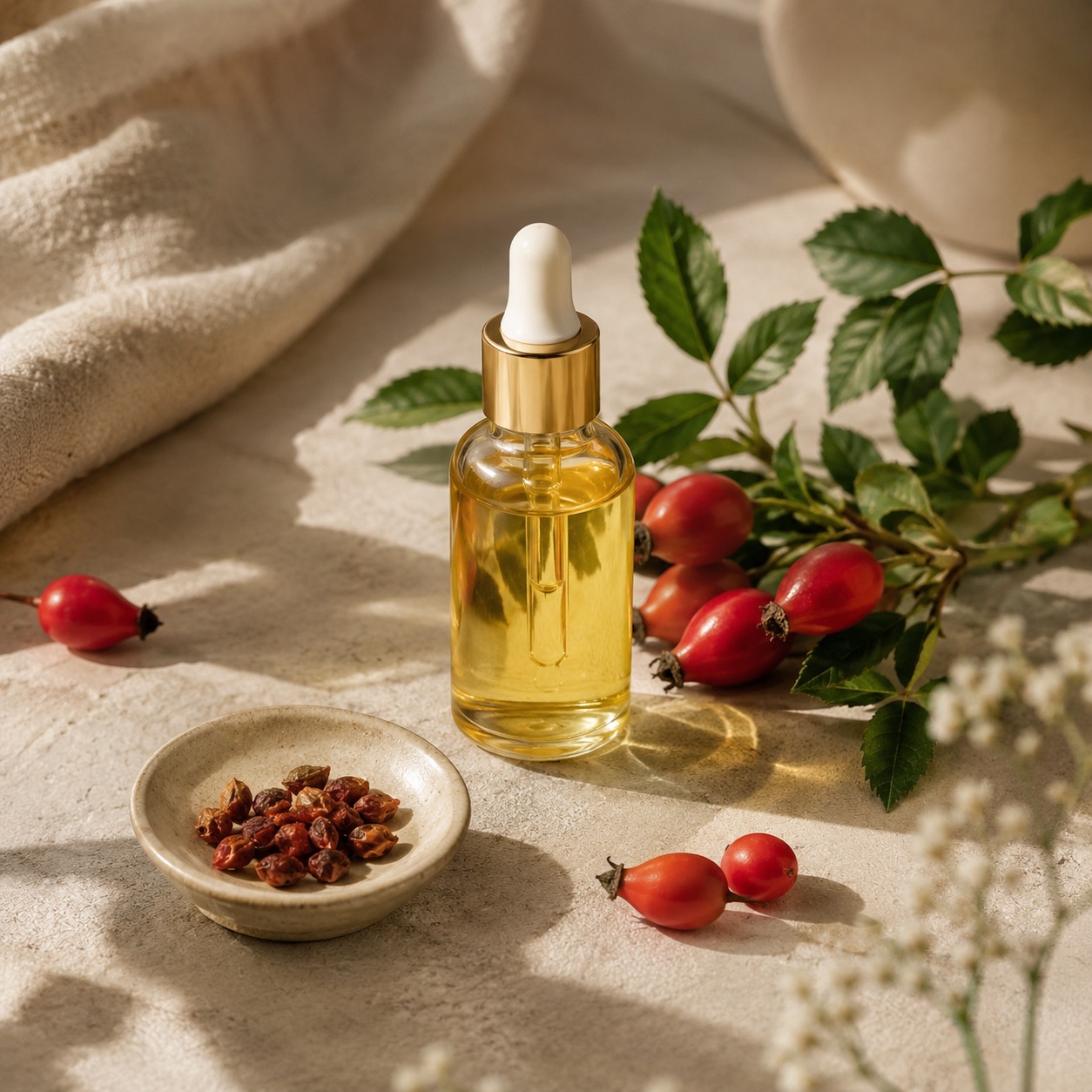
Plant oils with rich fatty acid profiles, sunflower, jojoba, sweet almond, argan, rosehip, raspberry seed, pumpkin seed, tend to outperform conventional lotions on menopausal body skin precisely because they deliver these missing materials directly.
Why Consistency Matters More Than Intensity
The barrier rebuilds slowly. It does not respond to harsh actives or aggressive routines, both of which can deplete it further. It responds to patience.
The best results on menopausal body skin tend to come from gentle, repeated application of well-chosen lipids. Daily care, particularly in the colder months. Gentler cleansers that preserve rather than strip. Warm rather than hot showers. The replenishment of fatty acids over weeks, not days.
This is unglamorous work. It is also the work that actually changes how the skin feels.
A Quieter Approach to Menopausal Skincare
Most skincare aimed at women over 45 still speaks in the vocabulary of correction. Of fighting, fixing, defying.
The biology suggests something different. The skin is not broken. It is doing what skin does in a changed hormonal environment. The most useful thing skincare can do is meet it where it is, with the materials it can actually use.
Baya was built around this idea. That women navigating perimenopause and menopause deserve products that take the specific biology of their skin seriously, with the calm and specificity that biology actually responds to. The aim is replenishment rather than rescue. Repair rather than reversal.
This is what biologically intelligent skincare looks like in practice. Not loud. Not dramatic. Precise.
The Bottom Line
Menopausal skin feels different because it is different.
It has less estrogen supporting its lipids, less collagen supporting its structure, and a slower repair system catching its daily wear. None of this is a failure. All of it is biology.
The skin you have now is still responsive. It just needs different inputs than it once did. Lipid-rich formulas. Gentler routines. Consistency rather than intensity. The recognition that this is a new phase of skin, deserving its own approach, rather than a degraded version of a previous one.
That recognition, more than any product, is what shifts the experience of menopausal skin from confusion to care.
Frequently asked questions
Several changes happen at once. Estrogen decline reduces the lipids that hold the skin barrier together, slows collagen production, lowers hyaluronic acid, and reduces sebum. The result is skin that holds less water, is structurally thinner, and repairs itself more slowly.
The earliest signs are often tactile rather than visual. Tightness after showering, dry shins despite regular lotion use, a finer or papery quality on the inner arms, and clothing that suddenly feels scratchy are all common early signals.
Yes. Estrogen supports the lipids and hyaluronic acid that keep skin hydrated, and it encourages sebum production. As it declines, the skin loses several mechanisms for retaining moisture at the same time.
Body skin has fewer sebaceous glands than facial skin, particularly on the shins, forearms, and chest. These areas often show menopausal changes earlier and need more concentrated lipid replenishment than facial skincare provides.
Yes, often substantially. Consistent use of lipid-rich body oils, gentler cleansers, and patient daily care can soften crepey texture, reduce tightness, and restore comfort. The improvements are gradual rather than immediate, but they are real.
The structural changes of menopause are lasting in the sense that estrogen does not return, but the comfort and resilience of the skin are highly responsive to the right care. Most women find that the right routine restores meaningful softness and reduces sensitivity within several weeks.
More from The Baya Journal