Skin Science · 7 min read
The Best Body Care Habits for Women Over 45
The body care habits that genuinely help menopausal skin. Daily routines, product shifts, and small changes that build comfort and resilience after 45.
Three things to know
Why Body Care Habits Matter More After 45.
Habit One: Lower the Water Temperature.
Habit Two: Reconsider Your Cleanser.
By the time most women reach their late forties, the bathroom shelf tells a complex story. A body lotion that worked beautifully five years ago and now seems to disappear into the skin without softening it. A body wash that suddenly leaves a faint tightness behind. A scrub that used to feel refreshing and now leaves the legs slightly irritated for the rest of the evening.
Nothing about the products has changed. The skin has.
The good news is that menopausal skin responds remarkably well to the right daily care. Not new technology, not heroic interventions, just a small set of habits that meet the biology of mature body skin where it actually is. The shift is more about how care is given than about how much.
What follows is a calm, considered set of body care habits worth building after 45.
Why Body Care Habits Matter More After 45
The reason habits become more important than they once were is structural.
As estrogen declines through perimenopause and menopause, the skin's barrier loses lipids. Collagen production slows. The skin becomes thinner, more reactive, and slower to repair small daily insults. Hot water, harsh cleansers, friction from towels, low humidity, and skipped routines all carry more weight than they did a decade ago.
This is not because the skin has become difficult. It is because the cushion of margin that younger skin had is smaller now. Small habits compound, in both directions. The right ones build resilience over weeks. The wrong ones erode it.
The habits below are not glamorous. They are the ones that consistently show up in the experience of women whose skin has genuinely improved during this phase.
Habit One: Lower the Water Temperature
Hot water is one of the most underappreciated culprits behind menopausal dry skin.
It does not just feel comforting, it actively strips lipids from the barrier. The hotter and longer the shower, the more thoroughly those lipids are dissolved away, leaving the skin tight and dehydrated within minutes of stepping out. On a younger barrier, this loss replenishes itself within hours. On a menopausal barrier, the deficit lingers.
Warm rather than hot. Shorter rather than longer. This single change, kept consistently, makes a noticeable difference in how skin feels by the end of the first month.
Habit Two: Reconsider Your Cleanser
Most conventional body washes are formulated for an intact barrier. They use surfactants designed to dissolve oils efficiently, which is exactly the opposite of what menopausal skin needs.
A gentler cleanser, ideally non-foaming or low-foaming, leaves the skin's natural lipid film more or less intact. The skin feels softer immediately after rinsing rather than tight. Over time, this preserves the barrier you are otherwise working to rebuild.
If your current body wash leaves a squeaky-clean sensation, that sensation is your barrier telling you it has been stripped. Worth replacing.
Habit Three: Apply Oil to Damp Skin
The single highest-leverage habit in menopausal body care is the one that takes the least effort.
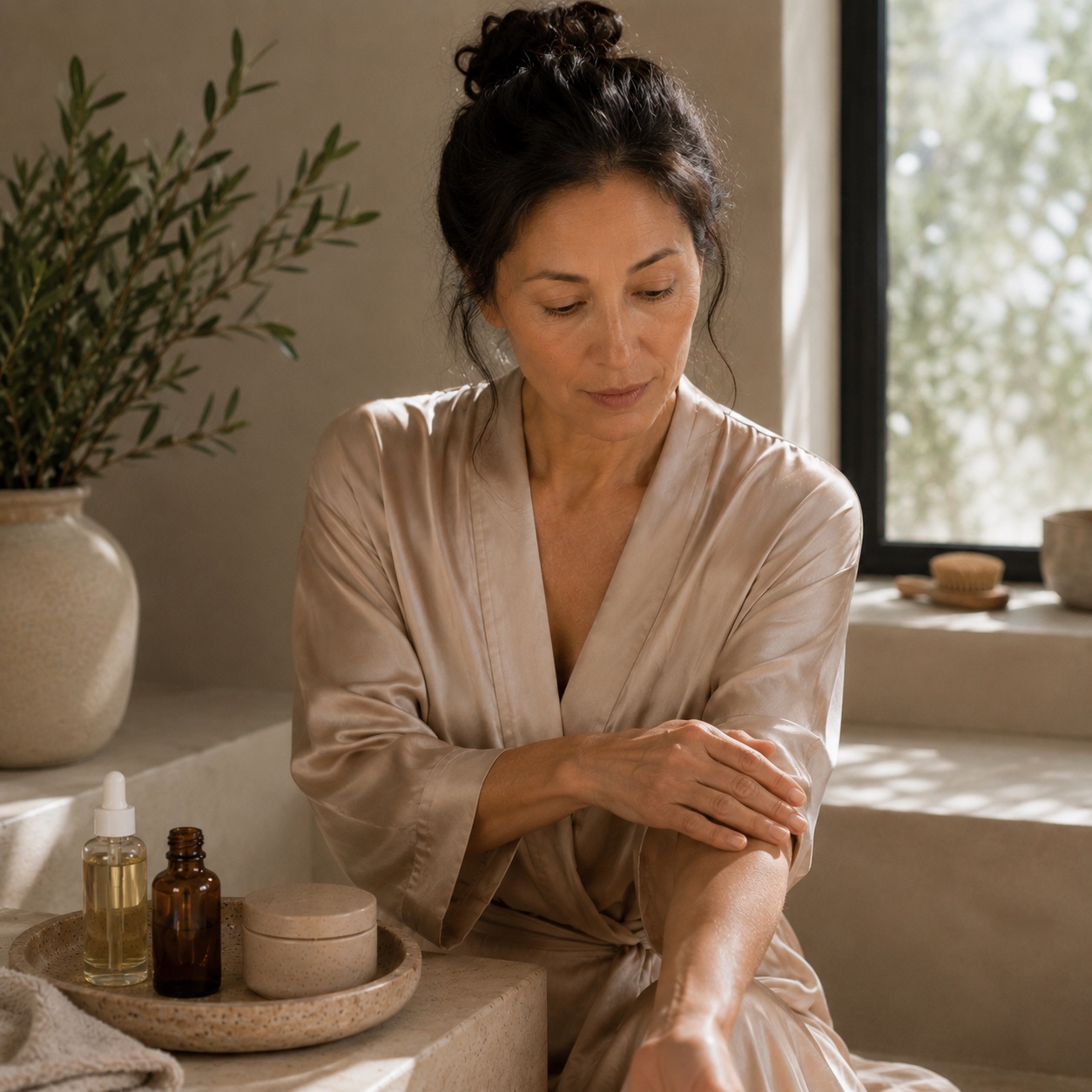
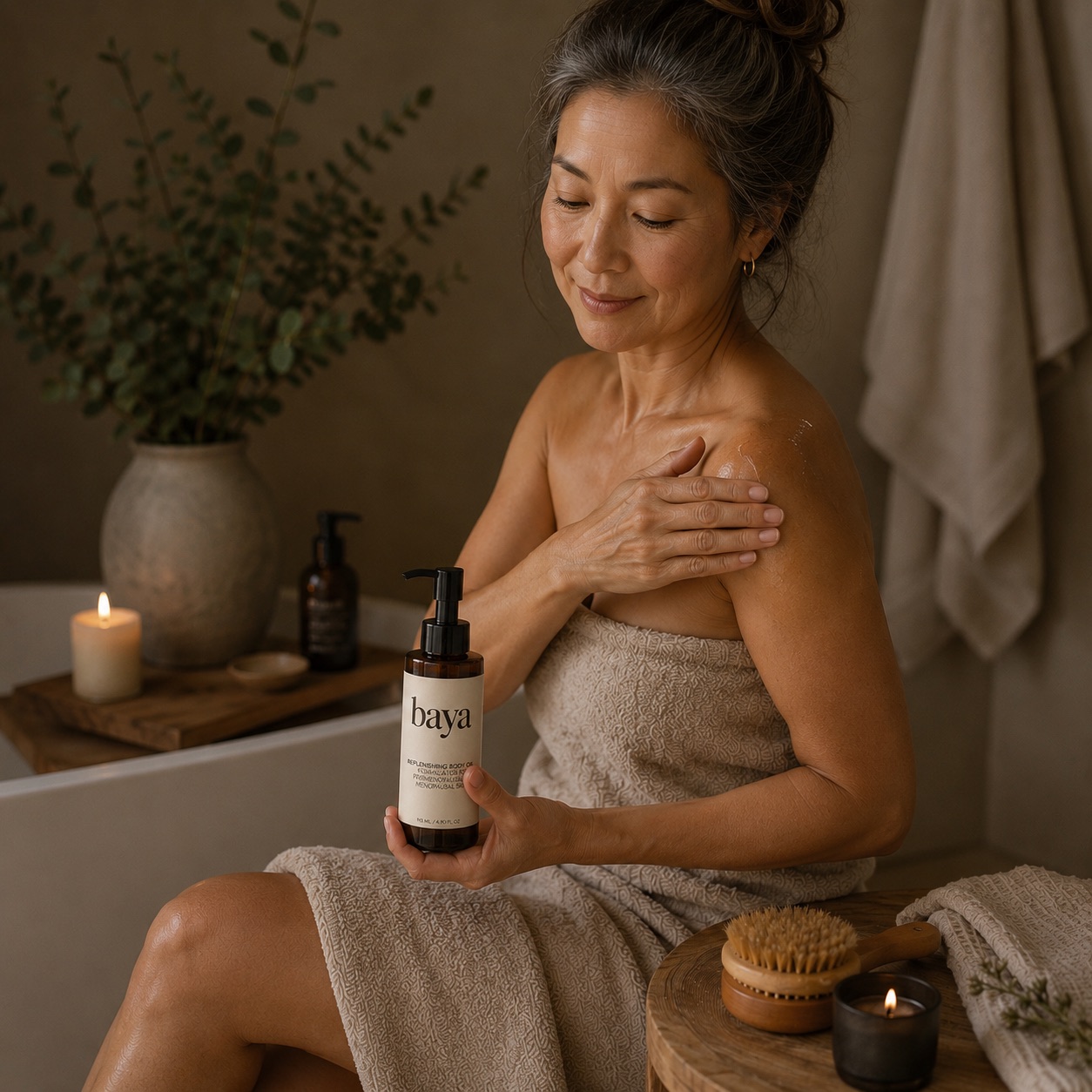
After a warm shower or bath, pat the skin gently with a towel rather than rubbing it dry. Leave a faint film of moisture on the skin. Then apply your body oil directly onto that damp surface, within roughly three minutes of stepping out.
The reason this works is straightforward. Water on the skin's surface has nowhere to go without something to seal it in. A lipid-rich oil applied to damp skin traps that water in the barrier rather than letting it evaporate. The skin stays softer for hours longer than it would if the oil were applied to fully dry skin.
This one habit alone often transforms how menopausal body skin feels.
Habit Four: Choose Lipids Over Lotions
The most important product shift after 45 is moving from water-based lotions to lipid-rich oils for body care.
Conventional lotions are designed to deliver water to the skin. They work well on an intact barrier that can hold that water in. On a menopausal barrier with depleted lipids, that water evaporates faster than the lotion can replace it, which is why so many women find themselves reapplying and still feeling tight.
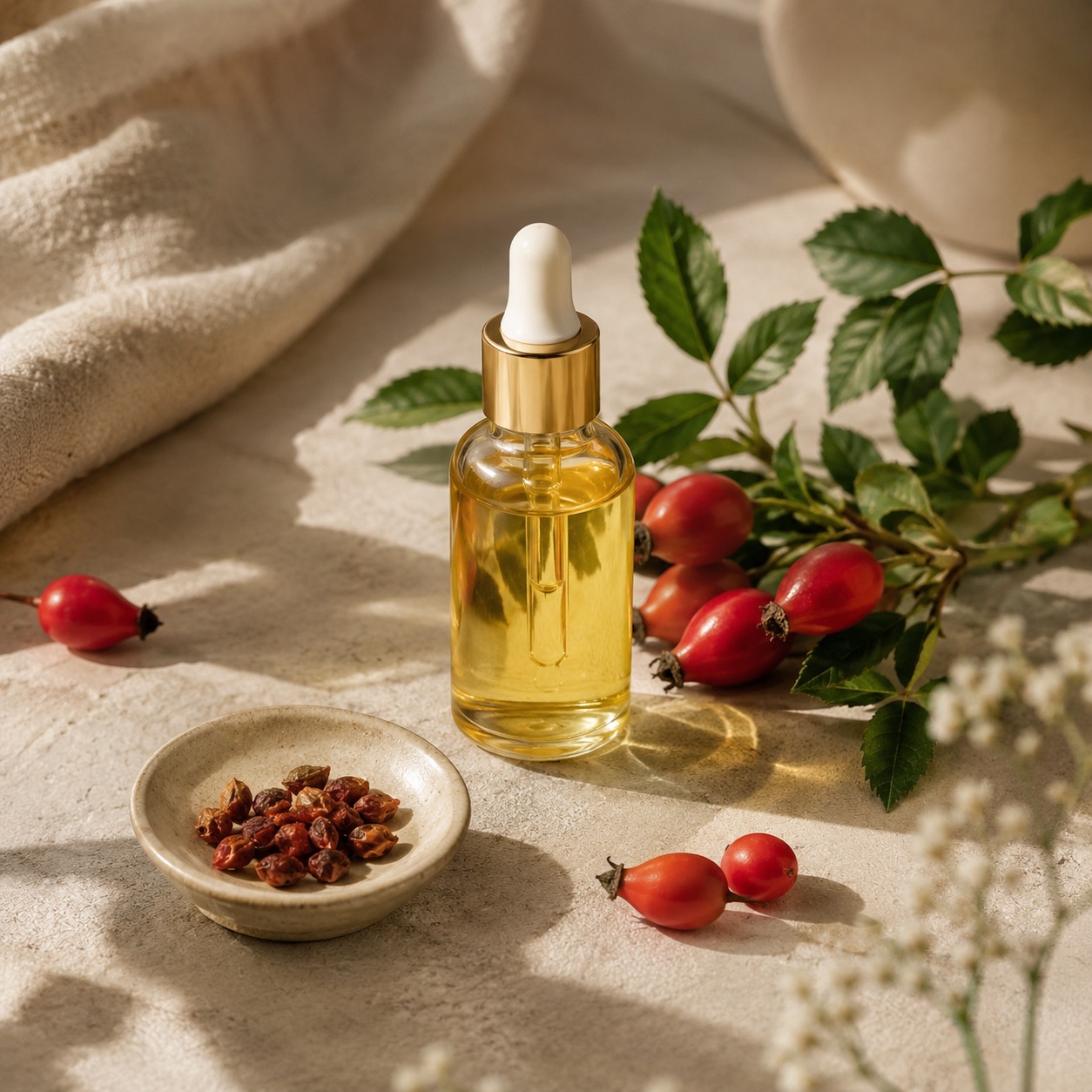
A well-formulated body oil delivers the specific materials the menopausal barrier has lost: linoleic acid, oleic acid, vitamin E, plant-derived squalene, fatty acids that slot directly into the barrier and help restore its structure. Oils rich in sunflower, jojoba, sweet almond, argan, rosehip, raspberry seed, and pumpkin seed tend to be particularly compatible with mature skin because their fatty acid profiles match what the skin is missing.
This is not about layering more product. It is about choosing the right one.
Habit Five: Do Not Forget the Forgotten Places
Many women apply body care thoroughly to the legs and arms, glancing past the areas that actually show menopausal changes first.
The places that genuinely benefit from daily attention:
- The chest and décolletage, where the skin is thin and has had decades of sun exposure
- The backs of the hands, which lose volume and fine collagen earlier than most other areas
- The shins, which have very few oil glands and are often the first place dryness becomes visible
- The elbows and knees, which roughen quickly without consistent lipid care
- The neck, which is frequently skipped in body care and skipped again in facial care, becoming a no-routine zone
Including these areas in daily application, even briefly, is one of the most visible changes women notice in the first few months of a new routine.
Habit Six: Daily, Not Heroic
Menopausal skin does not respond well to intensity. It responds to repetition.
A nightly application of body oil for six weeks will do more for crepey texture and chronic dryness than any single treatment, however expensive. The barrier rebuilds slowly. Lipids replenish layer by layer. Collagen support, where it is possible at all, accrues over months.
The temptation to skip for days and then make up for it with a heavy weekend treatment does not produce the same results. The skin needs the small, repeated input more than it needs the occasional dramatic one.
If a habit is going to slip, the right one to keep is the daily application of oil to damp skin after bathing. Everything else compounds from there.
Habit Seven: Protect the Body From the Sun
Most women who are diligent about sunscreen on the face are inconsistent about it on the body. This catches up.
The chest, the backs of the hands, the forearms, and the décolletage receive years of cumulative incidental sun exposure: driving, gardening, walking, working near a window. After 45, this exposure interacts with thinner skin and slower repair to accelerate texture changes, pigmentation, and that particular fragility that develops on sun-exposed body areas.
Daily SPF on the chest, the hands, and the forearms, even on overcast days, becomes one of the most useful long-term habits in body care during this phase. It does not undo what has already happened, but it slows what comes next.
Habit Eight: Support the Skin From the Inside
External care does most of the work, but not all of it.
The skin is responsive to what the body has to work with. Omega-3 fatty acids from food (oily fish, flaxseed, walnuts) support the lipid quality of the barrier. Adequate water and sleep support repair. Reducing very high-sugar foods can lower the low-grade inflammation that makes menopausal skin more reactive.
None of this replaces topical care. But women who notice the most meaningful changes in their body skin during menopause often describe a quiet combination of better daily routine, better lipid intake, and slightly more sleep, working together over time.
A Quieter Approach to Body Care
Most body care aimed at women over 45 still leans on the language of correction. Of fixing what has gone wrong. The biology suggests something different. Menopausal skin is not broken. It is operating in a changed hormonal environment, and it responds to the materials and habits that work with that environment rather than against it.
Baya was built around this idea. That women in perimenopause and menopause deserve body care that takes the specific biology of their skin seriously, with the calm and specificity it actually responds to. The habits above are the ones that consistently produce results for the women this product was designed for.
The goal is not transformation. The goal is comfort, resilience, and skin that feels like itself again.
The Bottom Line
The most useful body care habits after 45 are not dramatic. They are quiet and consistent.
Warmer rather than hotter water. Gentler cleansers. Oil applied to damp skin. A shift from water-based lotions to lipid-rich oils. Attention to the chest, hands, and shins. Daily repetition rather than weekend heroics. Sun protection on the body. Steady support from the inside.
None of these habits requires anything elaborate. Together, over weeks and months, they change how menopausal body skin feels in a way that no single product, however good, can match on its own.
Frequently asked questions
A simple, consistent routine usually works best. Warm shower with a gentle cleanser, pat dry without rubbing, apply a lipid-rich body oil to damp skin within a few minutes of stepping out, and pay attention to the chest, hands, and shins. Repeat daily, particularly in colder months.
For most women, once a day is sufficient if applied to damp skin after bathing. In winter, or for areas of particular dryness like the shins or hands, a second light application before bed can help further.
Lipid-rich body oils tend to outperform water-based lotions on menopausal skin because they directly replenish the fatty acids and lipids that estrogen decline has reduced. Lotions can still be useful, but oils address the underlying cause of dryness rather than the surface symptom.
Hot water dissolves the lipids that hold the skin barrier together. For menopausal skin, which already has fewer of those lipids, very hot showers accelerate dryness, tightness, and irritation. Warm water and shorter showers are gentler on the barrier.
Generally less, and more gently. Aggressive scrubs and strong chemical exfoliants can damage an already thinner barrier. Occasional mild exfoliation, no more than once or twice a week, is usually plenty. Most of the texture improvement women see comes from lipid replenishment rather than from exfoliation.
Very hot showers, foaming sulfate-based body washes, aggressive scrubs, fragranced products on already sensitive skin, applying products only to dry skin, and inconsistent routines where weeks of neglect alternate with heavy weekend treatments. The barrier responds to gentleness and repetition rather than intensity.
More from The Baya Journal